Korea · 20 min · Vegan · Side dish · For beginners
Gaji Bokkeum
In German: Gebratene Aubergine · In English: Stir-fried Eggplant
For 4 servings · US units
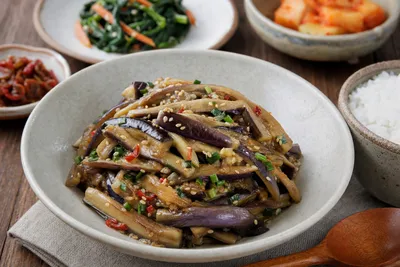
Stir-fried eggplant with soy sauce, garlic and sesame oil, ready in 20 minutes
Gaji bokkeum simply means stir-fried eggplant, and that's exactly its charm: the slices turn silky in a few minutes and soak up soy sauce, garlic and sesame oil. It's traditionally served as a side dish, especially in summer when eggplants are at their best. Spoon it over a bowl of rice, though, and you've got a complete vegan dinner in no time.
Ingredients
- 1⅛ lbEggplantpreferably slim Asian eggplants, about 2–3; halved lengthwise and sliced diagonally
- 2 tbspSoy saucebase of the seasoning sauce
- 1 tbspSugaror rice syrup (oligodang), plum syrup, agave or maple syrup; for the seasoning sauce
- 2 clovesGarlicminced, pressed or thinly sliced
- 2 tbspvegetable oilfor stir-frying
- 2 tsptoasted; stirred in at the endDark oil pressed from toasted sesame seeds, with a strong, nutty, roasted aroma; usually added at the end in small amounts as a seasoning.Substitute: There is no real substitute, as no other oil carries the roasted aroma; at a pinch, a neutral oil with freshly pan-toasted, crushed sesame seeds helps, though the flavour stays clearly weaker.Read more
- 1 tspsesame seedsfor sprinkling
- 2Spring onionsliced into rings; or a piece of Korean leek (daepa)
- 2 tbspWaterif the eggplant gets too dry
- 1 pinchBlack pepperground, to finish
- Saltto taste
- 1 tbspKorean chili paste, added to the sauce for the spicy version (optional)Korean chili paste made from glutinous rice, fermented soybeans, chili powder and salt, thick, hot, salty and faintly sweet.Substitute: There is no real substitute, because the fermented depth and the sticky sweetness together carry the dish. As a stopgap, light miso paste stirred with Korean chili powder or other mild chili flakes and a little honey or sugar roughly matches the salt, heat and sweetness, but tastes flatter and less rounded. Chili sauces such as sriracha are too thin and too sour and change the dish noticeably.Read more
- 2fresh chilisliced diagonally (optional)
- 1Bell pepperred or green, cut into strips or pieces; can replace the chili (optional)
- 1Onionthinly sliced, fried before the eggplant (optional)
- 1 tbspcooking rice wine or mirin, for the sauce (optional)A clear, mild wine made from fermented rice, used in Korean cooking mainly for marinades and to tame fishy smells.Substitute: Dry sherry or a dry white wine come closest, though they taste a little fruitier. If you use Japanese mirin the dish turns sweeter, so cut back slightly on the sugar in the recipe.Read more
- 1 tspGingerfinely grated or cut into matchsticks, fried with the garlic (optional)
Method
- Prep the vegetablesHalve the eggplants lengthwise and slice them diagonally into pieces or half-moons. Slice the spring onions into rings and set them aside for sprinkling. If you're using them, now's the time to slice the green chili peppers diagonally or cut the bell pepper into strips, and thinly slice the onion.
- Mix the seasoning sauceFor the seasoning sauce, stir the soy sauce and sugar (or a syrup of your choice) together in a small bowl. Add a splash of rice wine if you like, and for the spicy version, stir in the gochujang right away too.
- Fry the garlicHeat the vegetable oil in a pan over medium-high heat. Add the garlic and fry it briefly until fragrant; if you're using onion and ginger, add them to the pan at the same time.
- Soften the eggplantAdd the eggplant and toss it quickly in the oil so every piece gets a little coating. Stir-fry for about 1 to 2 minutes, until it starts to soften. If it drinks up the oil too fast and looks dry, add 1 to 2 tablespoons of water.
- Glaze with the saucePour in the seasoning sauce and add the chili or bell pepper, if using. Keep stir-frying and tossing until the eggplant has absorbed the seasoning and looks nice and glossy.
- Season and add sesame oilTurn off the heat. Season with black pepper and salt to taste, then fold in the toasted sesame oil.
- Garnish and serveTransfer the eggplant to a plate, sprinkle with sesame seeds and the sliced spring onions, and serve right away.
Tips and variations
For the spicy version, gochujang goes into the sauce, and if you want even more heat, sprinkle a little gochugaru over the top. Salting the eggplant first, letting it sit for a while and patting it dry means it takes up less oil; peeled, it turns especially soft, almost as if it had been steamed. For something crispier, toss eggplant sticks in starch and thicken the sauce with rice vinegar and starch. No longer vegan, but just as common: seasoned with oyster sauce, stir-fried with canned tuna and its oil, or braised Chinese-style with potato, bell pepper, ginger, oyster sauce and water under a lid. Our serving tip: gaji bokkeum is lovely as a side alongside other dishes, but piled onto a bowl of hot rice it becomes an easy main course.
Allergens
Contains: Cereals containing gluten, Sesame, Soybeans
May contain if you use the optional ingredients: Sulphur dioxide and sulphites
These notes follow from this recipe's ingredient list. Ready-made products and brands may contain further allergens — please check the packaging yourself.
Something not right?
This recipe was put together from independent sources and checked before publishing. Even so, a mistake can slip through — an amount that does not add up, a step that does not work as written. If you spot something, write to us: we will look into it and put it right.