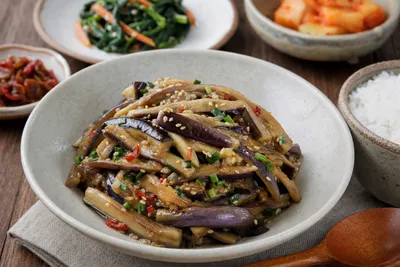
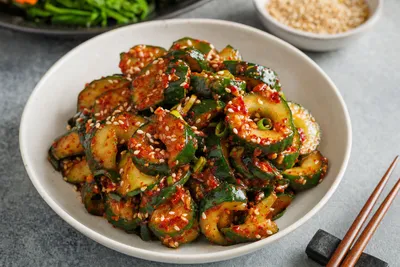
Korea · 60 minutes · Vegan · For preserving · For beginners
Oi Jangajji
For 12 servings · US units
Crisp Korean soy-pickled cucumbers in a sweet-salty brine that gets better daily
In Korea, jangajji means vegetables pickled in a brine of soy sauce and vinegar — here it's firm cucumbers, onion and a generous handful of chilies. The brine goes on boiling hot, which is what keeps the cucumbers snappy while they slowly soak up flavour. Keep a jar in the fridge and you'll never face a dull bowl of rice again, because these pickles taste better with every passing day.
Ingredients
- 2¼ lbCucumberfirm pickling cucumbers, washed and cut into bite-size pieces
- 1Onioncut into bite-size pieces
- 5Green chilileft whole and pierced or cut into rings; jalapeños work as a substitute
- 3fresh red chilicut into rings, for colour (optional)
- 1 cupSoy saucebase of the pickling brine
- ¾ cupVinegarany clear vinegar, cider vinegar also works
- 5¼ ozSugarfor the brine, also used to draw water from the cucumbers
- 1⅔ cupsWaterto dilute the brine
- Coarse sea saltfor scrubbing the cucumber skin or pre-salting
- 1Lemonthinly sliced, layered into the jar (optional)
Method
- Scrub the cucumbers under running water with coarse sea salt, rinse them thoroughly and pat them dry.
- Cut the cucumbers into bite-size pieces, or leave them whole; if they are very seedy, scoop out the soft centres with a spoon.
- If you like, pre-salt the cucumbers with a little salt or sugar for 30 minutes up to several hours, then pour off the liquid that collects — or save it for the brine.
- Cut the onion into bite-size pieces and slice the green and red chilies into rings; if you want to leave the chilies whole, pierce them several times with a skewer so the brine can get inside.
- Pack the cucumbers, onion and chilies tightly into clean jars, tucking in the thin lemon slices as you go if you're using them.
- Bring the soy sauce, water, sugar and rice vinegar to a boil in a pot, stirring until the sugar has completely dissolved.
- Pour the boiling brine over the vegetables so everything is fully submerged; press any floating pieces below the surface with a small plate or a weight.
- Close the jars, leave them at room temperature for a few hours to a couple of days, then move them to the fridge.
- To keep them longer, pour off the brine after a few days, bring it back to a boil and pour it boiling hot over the vegetables again.
Tips and variations
The brine takes well to changes: go pale and fruity by skipping the soy sauce and adding lemon slices, ginger, garlic and pickling spice — or go bold with equal parts soy sauce, vinegar and sugar and no water at all. If you draw the cucumbers with sugar for several hours beforehand, the cucumber juice simply becomes part of the brine; and if you prefer a fresher vinegar note, stir it into the hot brine after boiling rather than cooking it in. Any other firm vegetable works in the same brine in place of cucumbers. Serve jangajji as a side dish with rice — straight from the jar, cold, in small bowls with a spoonful of the brine.
Allergens
Contains: Cereals containing gluten, Soybeans
These notes follow from this recipe's ingredient list. Ready-made products and brands may contain further allergens — please check the packaging yourself.
Something not right?
This recipe was put together from independent sources and checked before publishing. Even so, a mistake can slip through — an amount that does not add up, a step that does not work as written. If you spot something, write to us: we will look into it and put it right.