Gyeongsang · 60 min · Meat · Main course · For confident cooks
Andong Jjimdak
In German: Geschmortes Hähnchen mit Glasnudeln · In English: Jjimdak (Korean Braised Chicken)
For 4 servings · US units
Braised chicken from Andong with glass noodles in a sweet-savoury soy sauce
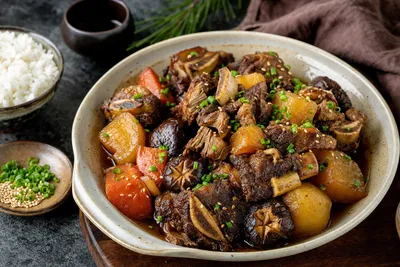
Andong Jjimdak takes its name from the city of Andong, and it's a pot worth making: bone-in chicken, chopped into pieces the Korean way, braises with potatoes, carrots and dried chillies in a dark, sweet-savoury soy sauce until the glass noodles soak everything up at the end. Serve it with a bowl of rice to spoon that glossy sauce over. It's just the thing for autumn and winter evenings, with the pot set right in the middle of the table.
Ingredients
- 2¼ lbchickenwhole chicken chopped through the bone, or thighs/wings
- 4¼ ozsoaked in waterTranslucent starch noodles, in Korean cooking usually made from sweet potato starch: glassy, smooth and distinctly chewy once cooked.Substitute: Mung bean glass noodles work, but they are thinner, softer and overcook more quickly, so cook them for less time and expect a less chewy dish.Read more
- 2Potatomedium, cut into chunks
- 1Carrotcut into chunks or diagonal slices
- 1Onionroughly cut
- 6 clovesGarlicminced, for the sauce
- 2 tspGingerfreshly grated
- ⅔ cupSoy saucebase of the braising sauce, partly dark soy for colour
- 4 tbspSugarbrown sugar preferred
- 3 tbspfor the sauce or for blanchingA clear, mild wine made from fermented rice, used in Korean cooking mainly for marinades and to tame fishy smells.Substitute: Dry sherry or a dry white wine come closest, though they taste a little fruitier. If you use Japanese mirin the dish turns sweeter, so cut back slightly on the sugar in the recipe.Read more
- 2¾ cupsWaterfor the braising liquid
- 2 tbspfor depth in the sauceThick, dark seasoning sauce made from reduced oyster extract, salty-sweet and deeply savoury.Substitute: Vegetarian mushroom-based oyster sauce comes closest; soy sauce with a little sugar is thinner and lacks the depth and gloss.Read more
- 3Chili pepperbraised whole
- 2Spring onioncut into pieces or rings, added at the end
- 1½ tbspstirred in at the endDark oil pressed from toasted sesame seeds, with a strong, nutty, roasted aroma; usually added at the end in small amounts as a seasoning.Substitute: There is no real substitute, as no other oil carries the roasted aroma; at a pinch, a neutral oil with freshly pan-toasted, crushed sesame seeds helps, though the flavour stays clearly weaker.Read more
- 2 tspsesame seedstoasted, for garnish
- ½ tspBlack pepperground
- 4 tbspfor gloss and sweetness of the sauce (optional)In Korean cooking this usually means a light starch or rice syrup (mulyeot, jocheong): thick, mildly sweet, and used for gloss.Substitute: Glucose syrup or light corn syrup come closest to the original, as does rice syrup. Honey or agave syrup also work but are noticeably sweeter and bring their own flavour, so use less; sugar dissolved in water sweetens but gives little gloss or body.Read more
- 3Mushroomssliced (optional)
- 1added at the end (optional)A fresh chili picked unripe, grassy and bright, ranging from mild to very hot depending on the variety.Substitute: For the mild variety, use long green peppers or mild green peppers such as Italian frying peppers; for the hot one, jalapeño or serrano. The fresh character stays the same, and you only need to adjust the amount for heat.Read more
Method
- Soak noodles, prep the chickenSoak the glass noodles (dangmyeon) in plenty of water so they're nice and supple by the time you need them. Chop the chicken through the bone into pieces, rinse them and trim off any excess fat.
- Blanch the chickenBring a pot of water to the boil, add the chicken pieces and blanch them briefly, until foam rises and the outside of the meat turns pale. Drain and rinse under cold water; this keeps the sauce cleaner later on.
- Cut the vegetablesCut the potatoes into rough chunks and keep them in a bowl of water so they don't brown. Cut the carrot into chunks or diagonal slices and roughly chop the onion.
- Mix the braising sauceFor the braising sauce, stir together the soy sauce, sugar, rice wine, minced garlic, grated ginger, oyster sauce, black pepper and water until the sugar has dissolved.
- Start braising the chickenPut the chicken and the sauce into a large pot, bring it to the boil, then lower the heat to medium and let it braise for about 10 to 20 minutes. Skim off any foam that rises to the surface.
- Add vegetables and chilliesAdd the drained potatoes, the carrot, the onion and the whole dried chillies, and braise for another 10 to 20 minutes, until the vegetables are tender.
- Let the noodles soak it upDrain the glass noodles and stir them in along with the spring onions. Let everything simmer for a few more minutes, until the noodles are soft and the sauce has thickened.
- Finish and serveTake the pot off the heat, stir in the sesame oil and scatter the toasted sesame seeds over the jjimdak. Serve hot with rice.
Tips and variations
For extra gloss and sweetness, add some corn syrup or honey to the sauce on top of the sugar, and sliced shiitake or button mushrooms are lovely braised along with everything else. If you like more heat, throw in a fresh green chilli right at the end. In Korea the chicken is often soaked in milk beforehand to tone down its gamey smell, and rice milk works too. Some cooks darken the sauce with a little instant coffee and add cucumber slices to the vegetables. Chicken breast alone can stand in for bone-in chicken, and if you're short on time you can skip the blanching and cook the meat straight in the sauce. Put the pot in the middle of the table, let everyone grab a bowl of rice and spoon plenty of sauce over it.
Allergens
Contains: Cereals containing gluten, Sesame, Soybeans, Sulphur dioxide and sulphites, Molluscs
These notes follow from this recipe's ingredient list. Ready-made products and brands may contain further allergens — please check the packaging yourself.
Something not right?
This recipe was put together from independent sources and checked before publishing. Even so, a mistake can slip through — an amount that does not add up, a step that does not work as written. If you spot something, write to us: we will look into it and put it right.