Korea · 2,5 h · Meat · Main course · For confident cooks
Bossam
For 4 servings · US units
Tender simmered pork belly with spicy radish salad, kimchi and leaves for wrapping
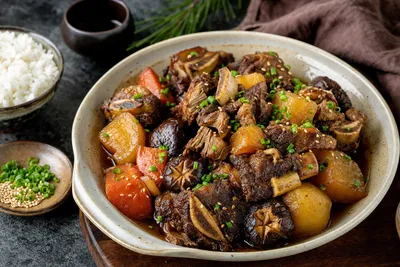
Bossam is one of those Korean spreads where everyone reaches in at once: a whole piece of pork belly simmers in a seasoned broth — cooked the traditional way, this meat is called suyuk — and is then sliced thin. You take a slice, add a little sticky rice, some spicy sauce and kimchi, tuck it into a cabbage or lettuce leaf and roll it into a parcel. With the spicy radish salad and a row of dips alongside, a platter of pork turns into a full meal that suits a weeknight just as well as a celebration.
Ingredients
- 2¼ lbPork bellywhole piece, uncut; pork shoulder works too
- 8½ cupsWaterfor the poaching broth, meat should be covered
- 1Onionhalved or quartered, for the broth
- 8 clovesGarlicwhole or smashed for the broth, some chopped for salad and dip
- ⅔ ozGingersliced for the broth, some grated for the seasoning paste
- 1½ tbspinto the broth, tames the pork odorKorean fermented soybean paste, dark, coarse and strongly salty with a deep, earthy flavour.Substitute: Dark, robust miso comes closest, but it is milder, sweeter and smoother; use a little more and add it towards the end of cooking. It does not quite reach the pungent, deep fermented note of doenjang.Read more
- 4Scallionsin chunks for the broth, chopped for salad and dip
- 1 tspBlack pepperfor the broth
- Saltcoarse salt for brining the cabbage, some for the broth
- ¼ cupfor the brothA clear, mild wine made from fermented rice, used in Korean cooking mainly for marinades and to tame fishy smells.Substitute: Dry sherry or a dry white wine come closest, though they taste a little fruitier. If you use Japanese mirin the dish turns sweeter, so cut back slightly on the sugar in the recipe.Read more
- 2Bay leaffor the broth (optional)
- 1 tspInstant coffeeinto the broth, masks the pork odor (optional)
- 1⅛ lbNapa cabbageinner leaves, salted or fresh, as wrappers
- 8lettucelarge leaves for wrapping, alternative to cabbage (optional)
- 14⅛ ozjulienned for the spicy radish saladKorean radish (mu), shorter and stouter than daikon, often pale green at the top, with firm, juicy, mildly sweet flesh.Substitute: Daikon or white radish works well, though it is more watery and less sweet, and turns softer when cooked. Some white radishes are also sharper, so taste before using.Read more
- 3 tbspfor the radish salad and shrimp dipKorean chili flakes made from sun-dried red chilies, ground coarse or fine. Bright red, fruity, mild to medium hot and slightly smoky.Substitute: The closest match is Aleppo pepper (pul biber) from a Turkish grocery, which is similarly fruity and mild but oilier, often salted and slightly tangier. In a pinch, mix sweet paprika with a little cayenne; this roughly matches colour and heat but not the fruitiness or texture. Ordinary crushed red pepper flakes are too hot to use in the usual quantities.Read more
- 1½ tbspanchovy fish sauce for the radish saladA clear, amber seasoning sauce made from salted, fermented fish, in Korea usually anchovies; very salty and deeply savoury.Substitute: Thai or Vietnamese fish sauce can be used one for one; it tastes slightly different but works well. There is no true fish-free substitute: light soy sauce with a pinch of salt provides salt and some savouriness, but not the fermented fish note.Read more
- 1½ tbspas a dip, also used in the radish saladTiny shrimp packed in plenty of salt and fermented, a very salty, savoury paste with the small shrimp still whole.Substitute: Fish sauce is the usual stopgap, especially in kimchi and soups: it supplies salt and umami, but tastes of fish rather than shrimp and leaves no small pieces in the dish. As a dip for pork there is no workable substitute, because the flavour and bite of the whole shrimp are the point there.Read more
- 1½ tbspSugarfor the radish salad, cabbage brine and dip
- 1 tbspSesame seedsroasted, for sprinkling
- 7 ozserved alongside for wrappingLacto-fermented napa cabbage with chilli, garlic, ginger and usually fish sauce, sour, spicy and savoury.Substitute: There is no true substitute: sauerkraut with chilli flakes, garlic and a dash of fish sauce matches the sourness, but neither the depth of flavour nor the crisp bite. With some time to spare, making your own kimchi is the better route.Read more
- 5¼ ozOystersfresh, folded into the radish salad just before serving (optional)
- 2 tbspSoy saucefor the broth or dip (optional)
- 2 tsptoasted, for the dipping sauce (optional)Dark oil pressed from toasted sesame seeds, with a strong, nutty, roasted aroma; usually added at the end in small amounts as a seasoning.Substitute: There is no real substitute, as no other oil carries the roasted aroma; at a pinch, a neutral oil with freshly pan-toasted, crushed sesame seeds helps, though the flavour stays clearly weaker.Read more
- 1 tspfor the seasoning paste or ssamjang (optional)Korean chili paste made from glutinous rice, fermented soybeans, chili powder and salt, thick, hot, salty and faintly sweet.Substitute: There is no real substitute, because the fermented depth and the sticky sweetness together carry the dish. As a stopgap, light miso paste stirred with Korean chili powder or other mild chili flakes and a little honey or sugar roughly matches the salt, heat and sweetness, but tastes flatter and less rounded. Chili sauces such as sriracha are too thin and too sour and change the dish noticeably.Read more
Method
- Make the aromatic brothRinse the whole piece of pork belly under cold water. Bring the water to a boil with onion, garlic, sliced ginger, chunks of scallion, doenjang, peppercorns, salt and rice wine; if you like, add the bay leaves and a teaspoon of instant coffee, which takes the edge off the pork's smell.
- Simmer the pork bellyLower the meat into the simmering broth — it should be covered — turn down the heat and let it simmer gently, covered, until tender. After about 45 to 60 minutes, test with a chopstick: it should slide through without resistance.
- Brine the cabbage leavesMeanwhile, put the inner napa cabbage leaves in a salt brine, then rinse them after about an hour and drain them well. If you'd rather keep things simple, use the leaves fresh, or reach for large leaf lettuce instead.
- Make the radish saladCut the radish into fine julienne, salt it, let it sit briefly and squeeze out the liquid. Then mix it with gochugaru, fish sauce, saeujeot, chopped garlic, grated ginger, sugar and finely sliced scallions, and taste for seasoning.
- Stir up the dipsFor the dip, stir saeujeot together with a little gochugaru, scallion, chopped garlic, sesame seeds and a splash of water. If you like, also mix a seasoning paste from gochujang, sesame oil and garlic, plus some soy sauce — several dips side by side is the usual way.
- Rest the meatLift the cooked meat out of the broth and let it rest, covered, for a few minutes so the juices settle. If you don't care for the skin, take it off now.
- Slice and plateSlice the pork belly crosswise into thin slices, arrange them on a platter and sprinkle with roasted sesame seeds.
- Wrap and serveSet out the cabbage or lettuce leaves, the radish salad, kimchi and the dips. At the table, lay a slice of pork with the accompaniments into a leaf, roll it up and eat it in one bite.
Tips and variations
For gul-bossam, fold fresh oysters into the radish salad just before serving — freshly made kimjang kimchi is especially good with it. You can also brush the cooked meat with a paste of doenjang, gochujang, honey, ginger and onion and brown it in the oven at 180 °C, or sear it hard on both sides in a very hot pan. If you'd rather work without water, braise the belly in its own fat on a bed of sliced onion and scallions. Instead of brine, the napa cabbage can steep in a sweet-sour pickle of sugar, vinegar, salt and water, and if you like the meat especially juicy, let it cool in the broth rather than serving it warm. For wrapping, sticky rice, rice noodles, thin rice cakes, chive salad and cucumber and carrot sticks are all worth putting on the table.
Allergens
Contains: Fish, Crustaceans, Sesame, Soybeans, Sulphur dioxide and sulphites
May contain if you use the optional ingredients: Cereals containing gluten, Molluscs
These notes follow from this recipe's ingredient list. Ready-made products and brands may contain further allergens — please check the packaging yourself.
Something not right?
This recipe was put together from independent sources and checked before publishing. Even so, a mistake can slip through — an amount that does not add up, a step that does not work as written. If you spot something, write to us: we will look into it and put it right.