Korea · 12 h · Vegan · For preserving · For confident cooks
Baechu Kimchi
In German: Veganes Napakohl-Kimchi · In English: Vegan Napa Cabbage Kimchi
For 12 servings · US units
Vegan napa cabbage kimchi with a gochugaru rice-flour paste and gukganjang
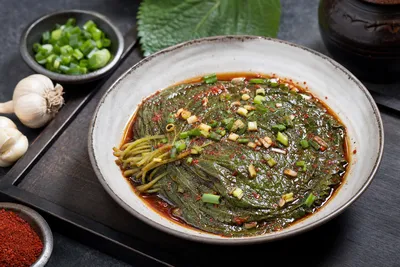
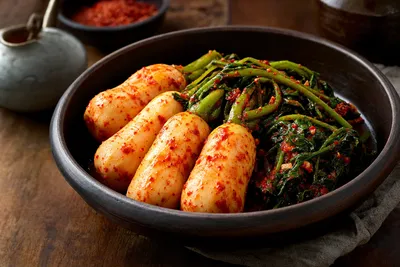
Baechu kimchi (배추 김치) is the napa cabbage kimchi that sits on just about every Korean table, and this version is fully vegan — Korean soup soy sauce (gukganjang) stands in for the salted seafood you'd normally find in the paste. The cabbage gets the traditional treatment: scored at the base, pulled apart by hand, salted layer by layer, then packed with seasoning leaf by leaf. Bring a little patience, because the flavour only really opens up after about two weeks in the fridge.
Ingredients
- 4⅓ lbNapa cabbagequartered lengthwise, base scored and pulled apart by hand
- 6⅓ ozCoarse sea saltfor the brine and for sprinkling between the leaves
- 10½ cupsWaterfor the brine
- 14⅛ ozcut into matchsticksKorean radish, shorter and stouter than Japanese daikon, with a greenish shoulder — firm, juicy, mildly peppery and slightly sweet.Substitute: Daikon or ordinary white radish work well; they are more watery and softer, cook faster and release more liquid in kimchi, so shorten cooking times and drain more thoroughly after salting.Read more
- 5Scallionscut into 2 cm pieces
- 2¾ ozcoarse grind; determines heat levelKorean chili flakes made from sun-dried red chilies, ground coarse or fine. Bright red, fruity, mild to medium hot and slightly smoky.Substitute: The closest match is Aleppo pepper (pul biber) from a Turkish grocery, which is similarly fruity and mild but oilier, often salted and slightly tangier. In a pinch, mix sweet paprika with a little cayenne; this roughly matches colour and heat but not the fruitiness or texture. Ordinary crushed red pepper flakes are too hot to use in the usual quantities.Read more
- 2 tbspfor the cooked paste that binds the seasoningFlour ground from glutinous rice, a particularly starchy rice variety; once cooked it turns chewy, elastic and sticky.Substitute: There is no good substitute. Ordinary rice flour or wheat flour will not bind into a chewy, elastic dough, and the result turns crumbly or short; tapioca starch adds some chewiness but is more glassy and tastes different.Read more
- 1about 5 x 5 cm, for the brothCaution: Dried kelp is very high in iodine, so it should be used only in small amounts and not eaten in large quantities.Dried sheets of brown seaweed (Korean dashima, Japanese kombu), used above all to give broth a deep, savoury base.Substitute: There is no equivalent substitute; a pinch of glutamate seasoning or a little soy sauce adds savouriness but not the rounded, faintly oceanic taste, and the broth will be flatter.Read more
- 1Applegrated or blended with garlic and ginger
- 8 clovesGarlicminced or blended
- 2 tspGingergrated
- 1½ tbspfor umami in place of fish sauceA pale, very salty Korean soy sauce made from fermented soybean blocks, used to season soups and vegetable side dishes.Substitute: The closest match is Japanese light soy sauce (usukuchi), which is also pale and salty but milder and lacks the earthy fermented note of the Korean sauce. Ordinary soy sauce is only a stopgap: it darkens broth and vegetables and tastes sweeter, so use less of it and make up the difference with a little salt.Read more
- 2 tbspSaltto season the paste, add gradually to taste
- 1 tbspSugaror green plum syrup (maesil), to balance the heat
- 4¼ ozfor sweetness and colour in the vegan paste (optional)Cooked pumpkin blended until smooth, thick and mildly sweet.Substitute: Homemade puree from red kuri or kabocha works just as well and is even closer to Korean pumpkin; butternut is a little more watery and may need to be cooked down.Read more
- 3roughly chopped, for a pungent note (optional)Pungent, peppery leaves of brown mustard, in Korea often with reddish-purple leaves, used mainly for kimchi.Substitute: Green Chinese or Japanese mustard greens from an Asian grocer come closest in flavour, only the reddish colour is missing. Rocket matches the heat but is more tender and collapses faster when pickled.Read more
Method
- Quarter the cabbageQuarter the napa cabbage lengthwise: score only the base with a knife, then pull the quarters apart by hand so the leaves stay attached at the core.
- Brine and salt the cabbageMake a brine from the water and part of the coarse sea salt, and turn the cabbage quarters in it until coated all over. Sprinkle the remaining salt between the leaves, concentrating on the thick white ribs.
- Let the cabbage wiltLeave the cabbage to sit at room temperature for several hours, rearranging the quarters a few times so they all soften evenly and become bendy.
- Make the broth and rice pasteMeanwhile, simmer the dried kelp (dashima) in water and let the broth cool. Whisk the glutinous rice flour into some of the broth, bring it to a boil and stir constantly until it thickens into a paste, then let it cool as well.
- Mix the seasoning pasteStir the gochugaru (Korean chili flakes) into the lukewarm rice paste and let it swell for a moment. Grate or blend the apple or Asian pear with the garlic and ginger and mix it in, then stir in the gukganjang, salt and sugar or maesil syrup and taste as you go — add the salt gradually.
- Rinse and drain the cabbageRinse the salted cabbage several times in cold water, then drain thoroughly with the cut side facing down.
- Prepare the radish fillingCut the Korean radish into fine matchsticks, toss with the scallions and the seasoning paste, and let it sit for 30 minutes.
- Fill and pack the cabbageWearing gloves, spread the filling between the cabbage leaves one leaf at a time, roll up each quarter and pack it tightly into an airtight container. Rinse out the mixing bowl with a little of the dashima broth and pour it over.
- Ferment and let it matureLet the kimchi ferment at room temperature for one to two days, then move it to the fridge. It keeps ripening there — after about two weeks the flavour is fully developed, and it will keep for several weeks.
Tips and variations
If you'd rather keep things simple, cut the cabbage into bite-sized pieces straight away and just toss everything with the paste — that's mak-kimchi style. Tender spring cabbage (bomdong) works instead of napa, and only needs about an hour in the salt; if you're not set on the vegan version, use salted shrimp (saeujeot) and anchovy sauce in place of the soy sauce. Pumpkin puree adds sweetness and colour to the paste, and roughly chopped mustard greens (gat) bring a sharp, pungent note. You can also colour the radish matchsticks separately with part of the gochugaru first, and the paste only gets better if you let it sit overnight in the fridge — bigger batches freeze well too. Serve the kimchi cold, straight from the container, as a side with any everyday meal.
Allergens
Contains: Cereals containing gluten, Soybeans
May contain if you use the optional ingredients: Mustard
These notes follow from this recipe's ingredient list. Ready-made products and brands may contain further allergens — please check the packaging yourself.
Something not right?
This recipe was put together from independent sources and checked before publishing. Even so, a mistake can slip through — an amount that does not add up, a step that does not work as written. If you spot something, write to us: we will look into it and put it right.