Korea · 25 min · Vegetarian · Main course · For beginners
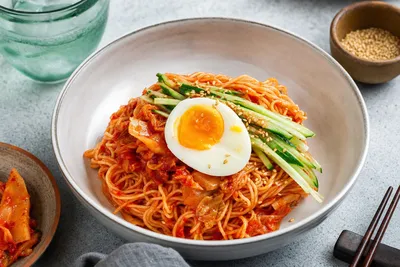
Bibim Guksu
In German: Gemischte Nudeln mit Gemüse · In English: Mixed Noodles with Vegetables
For 2 servings · US units
Cold noodles tossed with crisp cucumber and a sweet-hot chili dressing
Bibim Guksu is a Korean noodle dish with vegetables where everything comes together right in the bowl: noodles rinsed ice-cold, chilled cucumber matchsticks and a dressing built on Korean chili powder. Sweet, sour, salty and spicy all in one bite — exactly what you want on a hot summer day when standing over the stove has no appeal. It's on the table in about 25 minutes, and it tastes best the moment it's mixed.
Ingredients
- 6⅓ ozNoodlesbuckwheat, thin wheat or konjac noodles
- 1Cucumberseeded, cut into thin matchsticks, well chilled
- 2 tbspSoy saucefor the dressing
- 2 tbspSugarfor the dressing
- 1 tbspVinegarclear vinegar, for acidity
- 2 clovesGarlicfinely minced
- 1 tbspSesame seedstoasted, to toss in and sprinkle over
- 1 tbspfor heat and colour of the dressing (optional)Korean chili flakes made from sun-dried red chilies, ground coarse or fine. Bright red, fruity, mild to medium hot and slightly smoky.Substitute: The closest match is Aleppo pepper (pul biber) from a Turkish grocery, which is similarly fruity and mild but oilier, often salted and slightly tangier. In a pinch, mix sweet paprika with a little cayenne; this roughly matches colour and heat but not the fruitiness or texture. Ordinary crushed red pepper flakes are too hot to use in the usual quantities.Read more
- 1 tbspalternative base instead of soy sauce (optional)Korean chili paste made from glutinous rice, fermented soybeans, chili powder and salt, thick, hot, salty and faintly sweet.Substitute: There is no real substitute, because the fermented depth and the sticky sweetness together carry the dish. As a stopgap, light miso paste stirred with Korean chili powder or other mild chili flakes and a little honey or sugar roughly matches the salt, heat and sweetness, but tastes flatter and less rounded. Chili sauces such as sriracha are too thin and too sour and change the dish noticeably.Read more
- 1 tbsptossed in at the end (optional)Dark oil pressed from toasted sesame seeds, with a strong, nutty, roasted aroma; usually added at the end in small amounts as a seasoning.Substitute: There is no real substitute, as no other oil carries the roasted aroma; at a pinch, a neutral oil with freshly pan-toasted, crushed sesame seeds helps, though the flavour stays clearly weaker.Read more
- 2Egghard boiled, halved as topping (optional)
- 1Carrotjulienned, briefly cooked with the noodles (optional)
- 1Zucchinijulienned, briefly cooked with the noodles (optional)
- 2Spring onionsliced (optional)
- 1Onionthinly sliced, raw topping (optional)
- 3½ ozChicken breastpoached and shredded as topping (optional)
- 3½ ozsoaked, as topping (optional)Caution: Kombu and other brown seaweeds are very high in iodine and should be eaten only in small amounts rather than in large daily portions.Dried seaweed, in Korean cooking mainly miyeok (wakame), gim (nori) and dasima (kombu), with a salty, briny flavour.Substitute: There is no real substitute outside seaweed, as nothing else provides the briny flavour and texture; Japanese wakame, nori or kombu are the same seaweeds as the Korean ones and can be used directly.Read more
- 1 bunchBaby salad leavesas fresh topping (optional)
Method
- Mix the dressingFor the dressing, stir the soy sauce — or gochujang, if you'd rather use that as the base — together with the sugar, vinegar, finely minced garlic, Korean chili powder and some of the toasted sesame seeds in a small bowl until smooth, then let it sit for a few minutes.
- Cut the cucumber and vegetablesWash the cucumber, scrape out the seeds and cut it into fine matchsticks; keep it well chilled until you're ready to serve. Cut the carrot, zucchini and onion into thin strips as well, if using, and slice the spring onions.
- Cook the noodlesBring a large pot of water to a rolling boil and cook the noodles until just tender with a bit of bite. Whenever the water foams up hard, splash in a little cold water so it doesn't boil over.
- Blanch the vegetables brieflyIf you like, drop the carrot and zucchini strips into the noodle water for the last one to two minutes so they cook only briefly and stay crisp.
- Rinse the noodles coldDrain the noodles and rinse them under cold running water, working them through with your hands until they're properly cold. Then drain them thoroughly.
- Toss with the dressingPut the noodles, cucumber and the rest of the vegetables in a large bowl with the dressing and toss everything well with your hands so every strand is coated. Toss in the sesame oil at the end if you're using it.
- Top and serveDivide the noodles between two bowls, top with halved hard-boiled eggs, shredded poached chicken breast, soaked seaweed or baby salad leaves, scatter over the remaining sesame seeds and sliced spring onion, and serve right away.
Tips and variations
For an especially fresh bowl, use buckwheat noodles and leave out the cooked vegetables entirely, tossing them with nothing but raw, ice-cold cucumber. If you do add carrot and zucchini, the one-pot route keeps things simple: they cook right along with the noodles in the same water. A lighter version swaps in konjac noodles and tops them with seaweed and poached chicken breast; its dressing uses gochujang as the base instead of soy sauce, with plum syrup and chili sauce stirred in. Sliced cold cuts work as a topping in place of the egg. Nice at the table: serve the noodles and the dressing separately and let everyone mix their own — about two tablespoons of dressing per person.
Allergens
Contains: Cereals containing gluten, Sesame, Soybeans
May contain if you use the optional ingredients: Eggs
These notes follow from this recipe's ingredient list. Ready-made products and brands may contain further allergens — please check the packaging yourself.
Something not right?
This recipe was put together from independent sources and checked before publishing. Even so, a mistake can slip through — an amount that does not add up, a step that does not work as written. If you spot something, write to us: we will look into it and put it right.