Korea · 25 min · Vegetarian · Main course · For confident cooks
Kimchi Bibim Guksu
In German: Scharfe kalte Nudeln mit Kimchi
For 2 servings · US units
Ice-cold somyeon noodles tossed in a spicy kimchi sauce — ready in 25 minutes
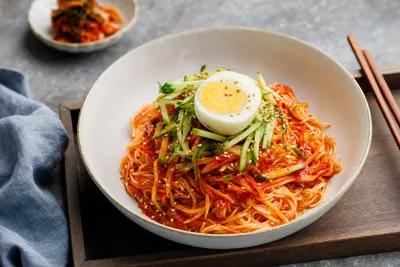
Kimchi Bibim Guksu is Korea's answer to a sweltering afternoon: thin wheat noodles shocked in ice water and tossed with a hot, tangy sauce built on gochujang and well-fermented kimchi. The older and sourer your kimchi, the better — that acidity is exactly what makes the bowl so refreshing. Pile on cucumber sticks, a halved boiled egg and plenty of sesame, and a snack turns into a proper cold meal.
Ingredients
- 8¾ ozSomyeon (thin wheat noodles)cook briefly, rinse in ice water
- 7 ozpreferably fully fermented, thinly slicedLacto-fermented napa cabbage with chilli, garlic, ginger and usually fish sauce, sour, spicy and savoury.Substitute: There is no true substitute: sauerkraut with chilli flakes, garlic and a dash of fish sauce matches the sourness, but neither the depth of flavour nor the crisp bite. With some time to spare, making your own kimchi is the better route.Read more
- ¼ cupkimchi juicereserved from the jar, adds acidity to the sauce
- 2 tbspbase of the seasoning sauceKorean chili paste made from glutinous rice, fermented soybeans, chili powder and salt, thick, hot, salty and faintly sweet.Substitute: There is no real substitute, because the fermented depth and the sticky sweetness together carry the dish. As a stopgap, light miso paste stirred with Korean chili powder or other mild chili flakes and a little honey or sugar roughly matches the salt, heat and sweetness, but tastes flatter and less rounded. Chili sauces such as sriracha are too thin and too sour and change the dish noticeably.Read more
- 1½ tbspfor the sauceDark oil pressed from toasted sesame seeds, with a strong, nutty, roasted aroma; usually added at the end in small amounts as a seasoning.Substitute: There is no real substitute, as no other oil carries the roasted aroma; at a pinch, a neutral oil with freshly pan-toasted, crushed sesame seeds helps, though the flavour stays clearly weaker.Read more
- 2 tbspfor freshness in the cold sauceA mild, pale vinegar made from rice, less sharp and slightly sweeter than wine vinegar.Substitute: Cider vinegar or white wine vinegar, diluted with a little water and rounded off with a pinch of sugar, comes close but tastes fruitier.Read more
- 1½ tbspSoy sauceto season the sauce
- 2 tbspRice syrupsweetener, sugar or honey work too
- 2 clovesGarlicfinely minced, raw into the sauce
- 2 tspSesame seedstoasted, in the sauce and for sprinkling
- 1 tspfor sprinkling (optional)Unhulled seeds of the sesame plant with a black coat, a little stronger and slightly more bitter in flavour than white sesame.Substitute: White sesame works anywhere but tastes milder and less earthy; where black sesame defines colour and flavour, as in porridge or paste, both are lost.Read more
- 3½ ozCucumbercut into fine sticks as topping
- 2Egghard boiled, halved on top
- 1 tbspMaesil (green plum) syrupfruity sweetness in the sauce (optional)
- 1 tbspfor extra heat and colour (optional)Dried, coarsely ground Korean chilies without seeds, bright red, mild to medium hot, fruity and slightly smoky.Substitute: The closest match is Aleppo pepper or pul biber from a Turkish grocery, which is similarly mild and fruity but can be oilier and a little saltier. A mix of sweet paprika with a small amount of cayenne matches the color and heat, but not the fruitiness or the coarse texture. Ordinary chili flakes are not a good substitute, because in the quantities a Korean recipe calls for they become far too hot; for kimchi, real gochugaru cannot really be replaced.Read more
- 1Carrotcut into fine sticks, raw or briefly fried (optional)
- 4finely shredded as topping (optional)Large, serrated leaves of Korean perilla, a plant of the mint family, strongly aromatic with a note somewhere between mint, anise and fresh grass.Substitute: There is no equivalent substitute. Japanese shiso, a related variety, comes closest, but it is smaller, more delicate and tastes brighter and more lemony. For wrapping you can fall back on lettuce leaves, but then the very aroma that defines the dish is missing.Read more
- crumbled over the noodles (optional)Caution: Kombu and other brown seaweeds are very high in iodine and should be eaten only in small amounts rather than in large daily portions.Dried seaweed, in Korean cooking mainly miyeok (wakame), gim (nori) and dasima (kombu), with a salty, briny flavour.Substitute: There is no real substitute outside seaweed, as nothing else provides the briny flavour and texture; Japanese wakame, nori or kombu are the same seaweeds as the Korean ones and can be used directly.Read more
- 1Spring onionsliced, into the sauce or as topping (optional)
Method
- Mix the seasoning sauceFor the seasoning sauce, stir gochujang, soy sauce, rice vinegar, rice syrup, sesame oil, the finely minced garlic and some of the toasted sesame seeds together in a large bowl until smooth. If you like, add maesil syrup for fruity sweetness and gochugaru for extra heat and colour.
- Fold in the kimchiSlice the kimchi finely and fold it into the sauce along with the reserved kimchi juice. Let the mixture sit while you get everything else ready.
- Cut the vegetablesCut the cucumber into fine sticks, and do the same with the carrot if you're using it. Slice the spring onion into rings if you want it.
- Boil and halve the eggsHard boil the eggs, cool them under cold water, peel and halve them.
- Cook the somyeonBring a generous pot of water to the boil and cook the somyeon for 2–4 minutes. When the water foams up, splash in a little cold water so it doesn't boil over.
- Chill and rinse the noodlesTip the noodles straight into ice-cold water and rinse them several times until they are properly cold and no longer starchy, then drain well and gently squeeze out the water.
- Toss noodles with the sauceToss the noodles thoroughly with the kimchi sauce until every strand is evenly coated, then taste and adjust with soy sauce, vinegar or syrup.
- Plate up and serve coldDivide between two bowls, arrange the cucumber and carrot sticks and the egg halves on top, and scatter with sesame seeds, black sesame, crumbled gim and spring onion. Serve cold, right away.
Tips and variations
If you want it even cooler, skip the dry toss and pour over a cold kimchi broth made from kimchi juice, water and rice syrup, then serve with ice cubes. Soba noodles work instead of somyeon, with leaf mustard as a topping; the carrot sticks can be quickly seared in a hot pan instead of going in raw, and finely shredded perilla leaves can stand in for the cucumber. The sweetness can come from sugar, corn syrup, oligo syrup, honey or maesil syrup — whatever is in the cupboard. Bring the bowls to the table with the toppings still on top so everyone can give them one more good mix.
Allergens
Contains: Eggs, Cereals containing gluten, Sesame, Soybeans
These notes follow from this recipe's ingredient list. Ready-made products and brands may contain further allergens — please check the packaging yourself.
Something not right?
This recipe was put together from independent sources and checked before publishing. Even so, a mistake can slip through — an amount that does not add up, a step that does not work as written. If you spot something, write to us: we will look into it and put it right.