Korea · 50 min · Meat · Main course · For confident cooks
Kongnamul Bap
In German: Reis mit Sojabohnensprossen · In English: Soybean Sprout Rice
For 4 servings · US units
Korean one-pot rice with soybean sprouts, meat and kimchi, with yangnyeomjang on the side
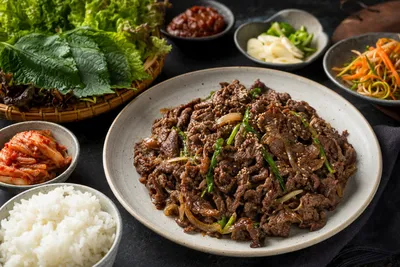
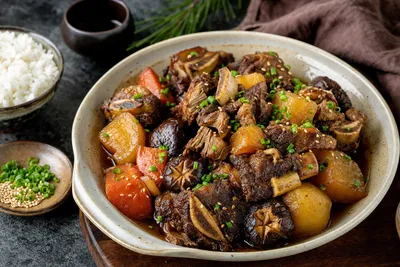
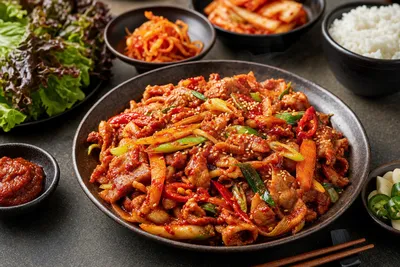
Kongnamul Bap is one of those Korean weeknight dishes where everything cooks in a single pot: rice, crisp soybean sprouts, marinated meat and properly sour kimchi. It comes to the table in a bowl and only gets its seasoning sauce right there — everyone stirs in as much yangnyeomjang as they like. That's what makes it so sociable and so easy to pull off on an ordinary Tuesday.
Ingredients
- 14⅛ ozrinse until water runs clear, drainShort, round japonica rice that cooks up soft and slightly sticky.Substitute: Sushi rice is an exact match; pudding rice or risotto rice turn out too mushy or too firm, and long-grain rice does not stick and will not work.Read more
- 1⅔ cupsWaterfor cooking the rice, about 1:1; 1–2 tbsp extra to dilute the sauce
- 10½ ozrinse, pick out bad beans, drain wellCaution: Soybean sprouts are not eaten raw but always cooked for a few minutes.Sprouted yellow soybeans with a large yellow bean head and a long, crisp stem, nuttier and sturdier than ordinary bean sprouts.Substitute: Mung bean sprouts will do at a pinch, but they are more delicate and watery and lack both the nutty flavour and the firm head; they need a much shorter cooking time.Read more
- 7 ozporkminced or thinly sliced, briefly marinated and pan-fried
- 7 ozwell fermented, cut into bite-sized strips, fried with the meatLacto-fermented napa cabbage with chilli, garlic, ginger and usually fish sauce, sour, spicy and savoury.Substitute: There is no true substitute: sauerkraut with chilli flakes, garlic and a dash of fish sauce matches the sourness, but neither the depth of flavour nor the crisp bite. With some time to spare, making your own kimchi is the better route.Read more
- 5 tbspSoy sauce1 tbsp for the meat marinade, 4 tbsp for the dipping sauce
- 1 tbspfor the meat marinadeA clear, mild wine made from fermented rice, used in Korean cooking mainly for marinades and to tame fishy smells.Substitute: Dry sherry or a dry white wine come closest, though they taste a little fruitier. If you use Japanese mirin the dish turns sweeter, so cut back slightly on the sugar in the recipe.Read more
- 3 clovesGarlicfinely minced, for marinade and dipping sauce
- 2 tbsptoasted, for marinade and dipping sauceDark oil pressed from toasted sesame seeds, with a strong, nutty, roasted aroma; usually added at the end in small amounts as a seasoning.Substitute: There is no real substitute, as no other oil carries the roasted aroma; at a pinch, a neutral oil with freshly pan-toasted, crushed sesame seeds helps, though the flavour stays clearly weaker.Read more
- 2 tspSugarfor the dipping sauce
- 1 tbspfor the dipping sauceKorean chili flakes made from sun-dried red chilies, ground coarse or fine. Bright red, fruity, mild to medium hot and slightly smoky.Substitute: The closest match is Aleppo pepper (pul biber) from a Turkish grocery, which is similarly fruity and mild but oilier, often salted and slightly tangier. In a pinch, mix sweet paprika with a little cayenne; this roughly matches colour and heat but not the fruitiness or texture. Ordinary crushed red pepper flakes are too hot to use in the usual quantities.Read more
- 1 tbspSesame seedstoasted, for the dipping sauce
- 2Spring onionfinely sliced, for the dipping sauce
- Black pepperfor marinade and sauce
- 1 tbspfor the dipping sauce (optional)A mild, pale vinegar made from rice, less sharp and slightly sweeter than wine vinegar.Substitute: Cider vinegar or white wine vinegar, diluted with a little water and rounded off with a pinch of sugar, comes close but tastes fruitier.Read more
- 2 tbspButterstirred into the finished rice (optional)
Method
- Wash the ricePut the short grain rice in a bowl and wash it in several changes of cold water until the water stays clear, then drain it well or let it soak briefly.
- Clean the soybean sproutsRinse the soybean sprouts, picking out any bad beans as you go, and drain them thoroughly.
- Marinate the meatChop the meat or cut it into thin slices and mix it with 1 tbsp soy sauce, 1 tbsp rice wine or mirin, 1 minced garlic clove, 1 tbsp toasted sesame oil and a pinch of black pepper. Let it marinate for about 15 minutes.
- Fry the meat and kimchiFry the marinated meat in a little oil over medium-high heat and pour off any excess liquid. Cut the kimchi into bite-sized strips, add it to the pan and fry until it is soft and fragrant.
- Cook the layered ricePut the rice and water into a heavy pot or a rice cooker and layer the meat, kimchi and soybean sprouts on top. Bring it to a boil covered, then lower the heat in stages and cook over low heat for about 15 minutes, keeping the lid closed the whole time.
- Make the seasoning sauceMeanwhile, stir together the seasoning sauce: 4 tbsp soy sauce, 2 tsp sugar, 1 tbsp gochugaru, 1 tbsp toasted sesame oil, 1 tbsp toasted sesame seeds, the remaining 2 minced garlic cloves, the sliced spring onions, a pinch of pepper and, if you like, 1 tbsp rice vinegar. Thin it with 1–2 tbsp water if it seems too thick.
- Let the rice restTake the pot off the heat and let it sit, still covered, for 5 to 15 minutes.
- Mix everything togetherFold everything together gently so the sprouts, meat and kimchi are evenly distributed through the rice. If you like, stir in 2 tbsp butter now.
- Serve with the sauceServe in bowls with the seasoning sauce alongside, so everyone can season their own to taste.
Tips and variations
Instead of cooking the sprouts with the rice from the start, you can also lay them on the nearly finished rice for the last few minutes of cooking. Instead of minced meat, thinly sliced pork belly, pork shoulder or pork cheek works well; leave the meat out altogether and the dish is vegan. If your kimchi is very strong, rinse it before frying until it looks pale — or skip it entirely and go with just the marinated meat. The sauce takes well to chopped green chilli, a splash of vinegar, or a little water to loosen it. Kimchi and seasoned seaweed sheets make good side dishes.
Allergens
Contains: Cereals containing gluten, Sesame, Soybeans, Sulphur dioxide and sulphites
May contain if you use the optional ingredients: Milk (including lactose)
These notes follow from this recipe's ingredient list. Ready-made products and brands may contain further allergens — please check the packaging yourself.
Something not right?
This recipe was put together from independent sources and checked before publishing. Even so, a mistake can slip through — an amount that does not add up, a step that does not work as written. If you spot something, write to us: we will look into it and put it right.