Korea · 20 min · Fish · Side dish · For beginners
Eomuk Bokkeum
In German: Gebratene Fischkuchen · In English: Stir-fried fish cake with green chili
For 4 servings · US units
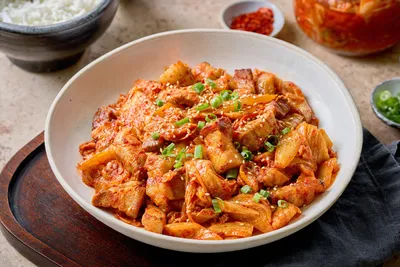
Fish cake strips with onion and chili, glossed in a soy sauce glaze
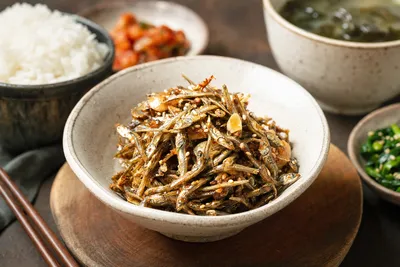
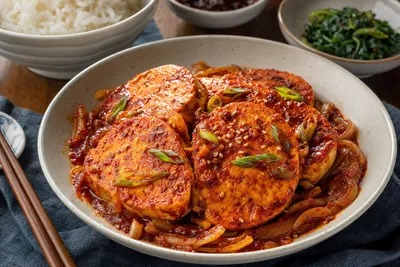
Eomuk bokkeum is one of those Korean banchan you want sitting on the table more or less permanently: strips of fish cake tossed in a glossy soy sauce glaze with onion, spring onion and green chili. It's eaten alongside rice, a fried egg, a bowl of soup and whatever other side dishes are going, warm from the pan or cold straight from the fridge. Cooked mild, without any gochugaru, it counts as a kid-friendly side, and the whole thing is ready in twenty minutes.
Ingredients
- 8¾ ozsheets or mixed types, cut into bite-size piecesFried paste of white fish and a little starch, usually shaped into thin sheets; springy, mildly sweet and salty, and it soaks up broth.Substitute: The closest match is Japanese fried fish cake (satsuma-age) or fried fish balls from an Asian grocery, which are similar in flavour and texture but differ in shape. Steamed kamaboko is firmer and takes up less sauce. Western products such as fish fingers or surimi sticks are no real substitute, since they lack the springy texture and fall apart in broth.Read more
- 2¾ ozOnionthinly sliced
- 2 clovesGarlicminced
- 2Spring onioncut into pieces; Asian leek works as substitute
- 2sliced into rings or stripsA fresh chili picked unripe, grassy and bright, ranging from mild to very hot depending on the variety.Substitute: For the mild variety, use long green peppers or mild green peppers such as Italian frying peppers; for the hot one, jalapeño or serrano. The fresh character stays the same, and you only need to adjust the amount for heat.Read more
- 2⅛ ozBell pepperred or yellow, thinly sliced, for colour (optional)
- 2 tbspSoy saucefor the seasoning sauce
- 1 tbspmirin or cooking rice wineA clear, mild wine made from fermented rice, used in Korean cooking mainly for marinades and to tame fishy smells.Substitute: Dry sherry or a dry white wine come closest, though they taste a little fruitier. If you use Japanese mirin the dish turns sweeter, so cut back slightly on the sugar in the recipe.Read more
- 1 tbspfor gloss; corn syrup or honey work as substitutesIn Korean cooking this usually means a light starch or rice syrup (mulyeot, jocheong): thick, mildly sweet, and used for gloss.Substitute: Glucose syrup or light corn syrup come closest to the original, as does rice syrup. Honey or agave syrup also work but are noticeably sweeter and bring their own flavour, so use less; sugar dissolved in water sweetens but gives little gloss or body.Read more
- 1 tspSugarmore if a sweeter result is desired (optional)
- 2 tbspvegetable oilfor stir-frying
- 1 tbspdrizzled in at the endDark oil pressed from toasted sesame seeds, with a strong, nutty, roasted aroma; usually added at the end in small amounts as a seasoning.Substitute: There is no real substitute, as no other oil carries the roasted aroma; at a pinch, a neutral oil with freshly pan-toasted, crushed sesame seeds helps, though the flavour stays clearly weaker.Read more
- 1 tbspsesame seedstoasted, for sprinkling
- 3⅓ tbspWaterfor a juicier sauce
- Black pepperfreshly ground
- 1 tbsponly for the spicy version (optional)Korean chili flakes made from sun-dried red chilies, ground coarse or fine. Bright red, fruity, mild to medium hot and slightly smoky.Substitute: The closest match is Aleppo pepper (pul biber) from a Turkish grocery, which is similarly fruity and mild but oilier, often salted and slightly tangier. In a pinch, mix sweet paprika with a little cayenne; this roughly matches colour and heat but not the fruitiness or texture. Ordinary crushed red pepper flakes are too hot to use in the usual quantities.Read more
- 2 tspfor the chili paste version of the sauce (optional)Korean chili paste made from glutinous rice, fermented soybeans, chili powder and salt, thick, hot, salty and faintly sweet.Substitute: There is no real substitute, because the fermented depth and the sticky sweetness together carry the dish. As a stopgap, light miso paste stirred with Korean chili powder or other mild chili flakes and a little honey or sugar roughly matches the salt, heat and sweetness, but tastes flatter and less rounded. Chili sauces such as sriracha are too thin and too sour and change the dish noticeably.Read more
- 1 tspfor extra depth in the sauce (optional)Thick, dark seasoning sauce made from reduced oyster extract, salty-sweet and deeply savoury.Substitute: Vegetarian mushroom-based oyster sauce comes closest; soy sauce with a little sugar is thinner and lacks the depth and gloss.Read more
Method
- Prepare the fish cakesIf your fish cakes are frozen, thaw them first. Then blanch them briefly in hot to boiling water and drain them well.
- Slice the fish cakesCut the drained fish cakes into bite-size strips.
- Cut the vegetablesThinly slice the onion, spring onion, green chili and, if you're using it, the bell pepper, and mince the garlic. Keep the green chili to one side, as it only goes into the pan at the end.
- Mix the seasoning sauceFor the seasoning sauce, stir together the soy sauce, rice wine and syrup, add the sugar as well if you want it sweeter, then season with freshly ground black pepper.
- Fry the aromaticsHeat the vegetable oil in a pan and fry the garlic, onion, spring onion and, if using, the bell pepper for 1 to 3 minutes, until fragrant.
- Stir-fry the fish cakesAdd the fish cakes and stir-fry for another 1 to 3 minutes, until they've softened and picked up a little colour.
- Let the sauce reducePour in the seasoning sauce, along with the water if you like, and let it bubble down while you keep stirring.
- Add the chili lastWhen the sauce has almost reduced, add the green chili and keep stir-frying until everything is coated and shiny. That way the chili keeps some bite.
- Finish and serveTake the pan off the heat, drizzle with sesame oil, scatter over the toasted sesame seeds and serve warm or cooled with rice.
Tips and variations
For more heat, stir gochugaru into the seasoning sauce. A deeper, punchier version builds the sauce on gochujang and sweetens it with honey instead of relying on soy sauce alone. A teaspoon of oyster sauce in the seasoning mix adds extra depth. If you want it mild and colourful, use bell pepper or carrot in place of the chilies. You can also skip the blanching: just give the fish cakes a quick rinse with hot water or simply thaw them. A splash more water in the pan makes the result juicier and the sauce silkier. A little corn syrup at the end gives you a high-gloss glaze. Serve eomuk bokkeum as banchan next to rice, a fried egg and a bowl of soup.
Allergens
Contains: Fish, Cereals containing gluten, Sesame, Soybeans, Sulphur dioxide and sulphites
May contain if you use the optional ingredients: Molluscs
These notes follow from this recipe's ingredient list. Ready-made products and brands may contain further allergens — please check the packaging yourself.
Something not right?
This recipe was put together from independent sources and checked before publishing. Even so, a mistake can slip through — an amount that does not add up, a step that does not work as written. If you spot something, write to us: we will look into it and put it right.