Korea · 20 min · Meat · Side dish · For beginners
Kimchi Bokkeum
In German: Gebratenes Kimchi · In English: Stir-fried Kimchi
For 4 servings · US units
Stir-fried kimchi with pork belly — on the table in 20 minutes
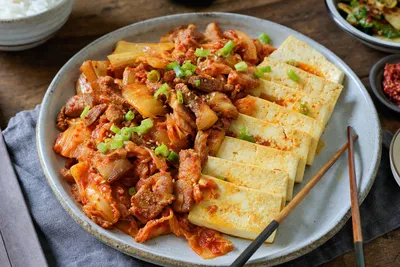
When the kimchi in the jar has turned too sour to eat straight, that's exactly the moment for kimchi bokkeum: a hot pan mellows it out, softens it and deepens the flavor. With crisp bits of pork belly, garlic and sesame oil it becomes a savory everyday dish that's served with rice in Korea. Make a double batch and you've got the base for kimchi jjigae or kimchi fried rice waiting in the freezer.
Ingredients
- 14⅛ ozwell-aged and sour, cut into bite-sized piecesLacto-fermented napa cabbage with chilli, garlic, ginger and usually fish sauce, sour, spicy and savoury.Substitute: There is no true substitute: sauerkraut with chilli flakes, garlic and a dash of fish sauce matches the sourness, but neither the depth of flavour nor the crisp bite. With some time to spare, making your own kimchi is the better route.Read more
- 8¾ ozPork bellythinly sliced or cut into small pieces (optional)
- 1 tbspvegetable oilfor frying
- 1 tspSugarbalances the sourness of the kimchi
- 1 tbspadd at the very endDark oil pressed from toasted sesame seeds, with a strong, nutty, roasted aroma; usually added at the end in small amounts as a seasoning.Substitute: There is no real substitute, as no other oil carries the roasted aroma; at a pinch, a neutral oil with freshly pan-toasted, crushed sesame seeds helps, though the flavour stays clearly weaker.Read more
- 1 tbspsesame seedstoasted, for sprinkling
- 2Spring onionsliced, stir-fried along or used as garnish
- 1 cloveGarlicfinely chopped
- 1 tbspto deglaze the meat (optional)A clear, mild wine made from fermented rice, used in Korean cooking mainly for marinades and to tame fishy smells.Substitute: Dry sherry or a dry white wine come closest, though they taste a little fruitier. If you use Japanese mirin the dish turns sweeter, so cut back slightly on the sugar in the recipe.Read more
- 1 tspfor a stronger flavor (optional)Korean chili paste made from glutinous rice, fermented soybeans, chili powder and salt, thick, hot, salty and faintly sweet.Substitute: There is no real substitute, because the fermented depth and the sticky sweetness together carry the dish. As a stopgap, light miso paste stirred with Korean chili powder or other mild chili flakes and a little honey or sugar roughly matches the salt, heat and sweetness, but tastes flatter and less rounded. Chili sauces such as sriracha are too thin and too sour and change the dish noticeably.Read more
- 1 tspfor color and heat (optional)Korean chili flakes made from sun-dried red chilies, ground coarse or fine. Bright red, fruity, mild to medium hot and slightly smoky.Substitute: The closest match is Aleppo pepper (pul biber) from a Turkish grocery, which is similarly fruity and mild but oilier, often salted and slightly tangier. In a pinch, mix sweet paprika with a little cayenne; this roughly matches colour and heat but not the fruitiness or texture. Ordinary crushed red pepper flakes are too hot to use in the usual quantities.Read more
- ½ ozbutterstirred in at the end for richness (optional)
- 2 tbspWateradd a spoonful at a time if the pan gets too dry (optional)
Method
- Prep the ingredientsCut the kimchi into bite-sized pieces, slice the green onions into rings and finely chop the garlic.
- Brown and deglaze the porkCut the pork belly into thin slices or small pieces, fry it in a hot pan with the vegetable oil until it takes on color, then deglaze with the cooking rice wine.
- Fry garlic and green onionAdd the garlic and some of the green onion and stir-fry briefly until fragrant.
- Cook the kimchi downAdd the kimchi and sugar and fry over medium heat for 3 to 5 minutes, stirring now and then, until the kimchi softens and the color shifts from red to orange.
- Add water if neededIf the pan gets too dry, add water a spoonful at a time so nothing scorches.
- Season to tasteSeason to taste with gochujang, gochugaru and a little more sugar if you like, and let it fry for a moment longer.
- Finish with sesameStir in the sesame oil and sesame seeds and take the pan off the heat after about 30 seconds. If you want, fold in the butter now.
- Garnish and serveScatter over the remaining green onion and serve with rice.
Tips and variations
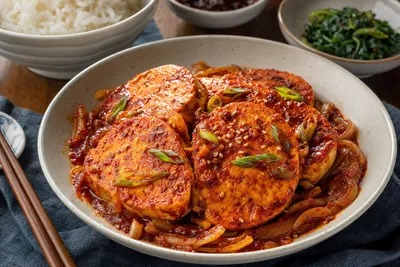
The recipe works just as well without meat: kimchi, oil, sugar and sesame oil, with garlic and green onion as a base if you like. For a bolder seasoning alongside the pork belly, reach for gochujang, gochugaru, garlic and soup soy sauce (guk-ganjang), and a knob of butter at the end rounds everything out. For a pretty plate, arrange slices of tofu in a circle around the kimchi and pork belly and add some pan-fried onion. The kimchi and pork belly mixture keeps well — cook a batch, freeze it, and turn it later into kimchi jjigae with tofu or kimchi fried rice with egg, nori and sesame. It tastes good hot, at room temperature and even cold.
Allergens
Contains: Sesame
May contain if you use the optional ingredients: Milk (including lactose), Soybeans, Sulphur dioxide and sulphites
These notes follow from this recipe's ingredient list. Ready-made products and brands may contain further allergens — please check the packaging yourself.
Something not right?
This recipe was put together from independent sources and checked before publishing. Even so, a mistake can slip through — an amount that does not add up, a step that does not work as written. If you spot something, write to us: we will look into it and put it right.