Korea · 90 min · Vegan · Side dish · For confident cooks
Gosari Namul
For 4 servings · US units
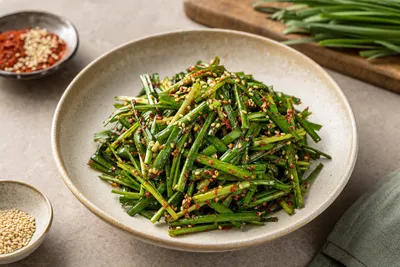
Korean fernbrake braised tender with soy sauce, garlic and sesame
Gosari namul is one of those quiet Korean side dishes that sneaks up on you: the fern stalks turn silky and just slightly chewy, carrying soy sauce, garlic and sesame oil beautifully. In Korea it sits next to the rice bowl as banchan, and in samsaek namul, the set of vegetable sides put together for their colors, it's the one that brings the brown. If you've eaten bibimbap, you've met it already — gosari is one of the standard vegetable toppings.
Ingredients
- 1⅓ ozsoak, boil until tender, remove woody stem ends, cut into 7–10 cm lengthsCaution: Bracken fern must never be eaten raw or merely soaked; after soaking it has to be boiled thoroughly and rinsed in several changes of water, because the plant contains harmful compounds that are largely removed only this way.Dried young shoots of bracken fern that are soaked and boiled before cooking. They are chewy, slightly fibrous and earthy-nutty in flavour.Substitute: There is no truly good substitute, because the chewy, fibrous texture and earthy flavour are distinctive. In soups and braises, dried shiitake stems torn into strips come closest in bite, but they bring a much stronger mushroom flavour. Fresh ostrich fern fiddleheads are softer and greener in taste and only partly suitable.Read more
- 1 tbspSoy saucepreferably Korean soup soy sauce (guk-ganjang)
- 1 cloveGarlicfinely minced
- 1Scallionsthinly sliced
- 1 tbspvegetable oilfor sautéing
- ¼ cupWaterfor finishing in the pan; kelp or beef broth as an alternative
- 1 tspfor seasoningDark oil pressed from toasted sesame seeds, with a strong, nutty, roasted aroma; usually added at the end in small amounts as a seasoning.Substitute: There is no real substitute, as no other oil carries the roasted aroma; at a pinch, a neutral oil with freshly pan-toasted, crushed sesame seeds helps, though the flavour stays clearly weaker.Read more
- 1 tspsesame seedstoasted, for sprinkling
- Sugara small pinch to round off the seasoning (optional)
- Saltto taste (optional)
- Black pepperto taste (optional)
- 1 tspmixed with 1 tbsp water to bind the pan juices (optional)Flour ground from glutinous rice, a particularly starchy rice variety; once cooked it turns chewy, elastic and sticky.Substitute: There is no good substitute. Ordinary rice flour or wheat flour will not bind into a chewy, elastic dough, and the result turns crumbly or short; tapioca starch adds some chewiness but is more glassy and tastes different.Read more
Method
- Soak the fernSoak the dried gosari in plenty of cold water, ideally 8 to 24 hours, until the stalks have fully rehydrated.
- Boil and cool the fernDrain off the soaking water, simmer the fern in boiling water until tender, then cool it in cold water, rinse thoroughly and drain well.
- Trim and cut the stalksSnap off and discard the tough, woody stem ends, then gather the soft stalks into bundles and cut them into 7 to 10 cm lengths.
- Marinate the fernToss the fern with the soy sauce, minced garlic and, if you like, a small pinch of sugar, and let it sit for a few minutes to take on the seasoning.
- Sauté in oilHeat the vegetable oil in a pan and sauté the marinated fern over medium heat for a few minutes, turning it often.
- Cook down with waterPour in the water and let it cook down uncovered until the liquid has almost completely evaporated and the stalks look soft and glossy.
- Season and finishSeason to taste with a little salt and black pepper, if you like, then fold in the sliced scallion, sesame oil and toasted sesame seeds and take the pan off the heat.
- Serve as a sideServe the gosari namul lukewarm or at room temperature as a side dish with rice.
Tips and variations
If you'd rather skip the long soak, boil the dried fern straight away for 30 to 40 minutes and let it cool in its cooking water. After a very long soak, on the other hand, a quick blanch is all it needs. Instead of reducing the liquid in an open pan, you can also steam the fern with a lid on. For a saucier finish, stir a teaspoon of sweet rice flour into a tablespoon of water and add it at the end to bind the remaining pan juices into a silky sauce. For more depth, swap the water for kombu broth — or beef broth, though that means the dish is no longer vegan. Serve it beside a bowl of rice, as a topping in bibimbap, or alongside two other namul as samsaek namul; sealed airtight, it keeps 3 to 4 days in the fridge.
Allergens
Contains: Cereals containing gluten, Sesame, Soybeans
These notes follow from this recipe's ingredient list. Ready-made products and brands may contain further allergens — please check the packaging yourself.
Something not right?
This recipe was put together from independent sources and checked before publishing. Even so, a mistake can slip through — an amount that does not add up, a step that does not work as written. If you spot something, write to us: we will look into it and put it right.