Korea · 45 min hands-on · 1 day waiting · Fish · Side dish · For beginners
Yeolmu Kimchi
In German: Kimchi aus jungem Sommerrettich · In English: Young Summer Radish Kimchi
For 12 servings · US units
Young radish green kimchi, loosely tossed with chili, garlic and ginger
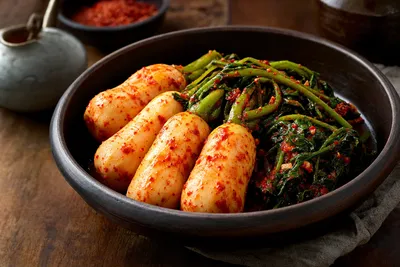
Yeolmu Kimchi is kimchi made from young radish greens, and that's exactly what makes it so light and fresh. A thin flour paste made from sweet rice flour binds the chili, garlic, ginger and salted shrimp seasoning, so it clings gently to the leaves. It's a summer kimchi that really comes into its own after a few days in the fridge.
Ingredients
- 1⅓ lbYoung radish greens (yeolmu)trimmed, root ends removed, cut into pieces about 5–8 cm long
- 2½ ozSaltfor salting the greens, dry or as a brine
- ⅔ ozfor the flour paste; wheat flour also worksFinely milled flour from glutinous rice that turns chewy, elastic and sticky when cooked.Substitute: For thickening kimchi seasoning paste, plain rice flour or a little wheat flour will do, the paste is just slightly less smooth. For rice cakes and anything meant to be chewy and stretchy there is no substitute, since neither plain rice flour nor wheat flour or cornstarch achieves that texture.Read more
- ¾ cupWaterfor the flour paste
- 5 clovesGarlicminced or blended
- 1 tbspGingergrated or blended
- 3 tbspfor the seasoning paste; use more if no fresh chilies are addedKorean chili flakes made from sun-dried red chilies, ground coarse or fine. Bright red, fruity, mild to medium hot and slightly smoky.Substitute: The closest match is Aleppo pepper (pul biber) from a Turkish grocery, which is similarly fruity and mild but oilier, often salted and slightly tangier. In a pinch, mix sweet paprika with a little cayenne; this roughly matches colour and heat but not the fruitiness or texture. Ordinary crushed red pepper flakes are too hot to use in the usual quantities.Read more
- 2 tbspfor the seasoning pasteA clear, amber seasoning sauce made from salted, fermented fish, in Korea usually anchovies; very salty and deeply savoury.Substitute: Thai or Vietnamese fish sauce can be used one for one; it tastes slightly different but works well. There is no true fish-free substitute: light soy sauce with a pinch of salt provides salt and some savouriness, but not the fermented fish note.Read more
- 3Scallionscut into short pieces
- 3red chiliroughly chopped, blended with the aromatics
- 1Onionthinly sliced or blended
- 1 tbspblended with the aromaticsTiny shrimp packed in plenty of salt and fermented, a very salty, savoury paste with the small shrimp still whole.Substitute: Fish sauce is the usual stopgap, especially in kimchi and soups: it supplies salt and umami, but tastes of fish rather than shrimp and leaves no small pieces in the dish. As a dip for pork there is no workable substitute, because the flavour and bite of the whole shrimp are the point there.Read more
- 1 tspSugarfor the seasoning paste
- 10½ ozNapa cabbagecut into pieces, salted separately (optional)
Method
- Trim and cut the radish greensTrim the young radish greens, cutting or scraping off the root ends, and cut them into pieces about 5 to 8 cm long. Then wash them thoroughly.
- Salt the greensLayer the greens with the coarse sea salt (or pour a brine over them) and let them sit for 30 to 60 minutes, turning them once or twice, until they're nicely pliable. If you're adding young napa cabbage, salt it separately the same way.
- Cook the flour pasteMeanwhile, stir the sweet rice flour into the water and cook it, stirring constantly, into a thin flour paste. Let it cool completely.
- Mix the seasoning pasteCoarsely blend the garlic, ginger, fresh red chilies, onion and salted shrimp, or chop everything finely. Stir this together with the gochugaru, fish sauce, sugar and the cooled flour paste to make the seasoning paste.
- Rinse and drainGently rinse the salted greens in cold water and let them drain well. If using napa cabbage, rinse and drain it the same way.
- Toss loosely with the pastePut on gloves and toss the greens, scallions and napa cabbage (if using) with the seasoning paste in batches. Mix only loosely and don't knead.
- Pack into a jarPack the kimchi into an airtight jar, leaving room at the top for fermentation, and seal it.
- Ferment, then chillLet the kimchi ferment at room temperature for a few hours up to 2 days, then move it to the fridge. It tastes best after a few days in there.
Tips and variations
You can mix in young napa cabbage, salted separately. For more depth, cook the flour paste in a broth of dried anchovies, kombu and shiitake instead of water; wheat flour works in place of sweet rice flour too. If you leave out the fresh chilies, just use more gochugaru. Soy sauce can stand in for the fish sauce, or you can skip it altogether. Turnip greens are a good swap for the radish greens. And if the radish root tempts you: kkakdugi is the related version made from cubed radish, without the flour paste and pre-salted with salt and sugar. To serve, bring it to the table well chilled, straight from the jar; after a few days in the fridge it's just right.
Allergens
Contains: Fish, Cereals containing gluten, Crustaceans
These notes follow from this recipe's ingredient list. Ready-made products and brands may contain further allergens — please check the packaging yourself.
Something not right?
This recipe was put together from independent sources and checked before publishing. Even so, a mistake can slip through — an amount that does not add up, a step that does not work as written. If you spot something, write to us: we will look into it and put it right.