Korea · 40 minutes · Fish · Soup · For beginners
Baechu-Doenjangguk
For 4 servings · US units
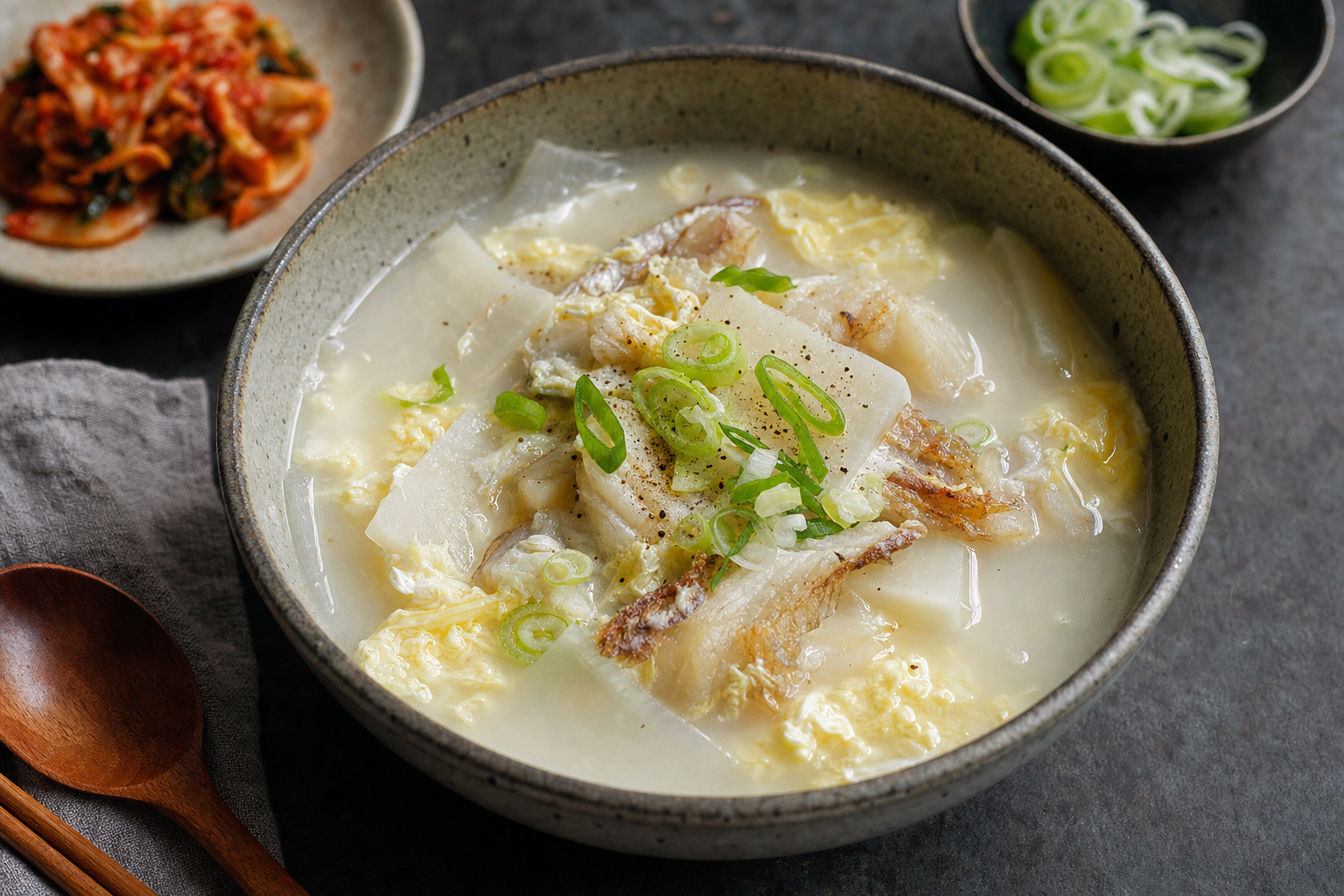
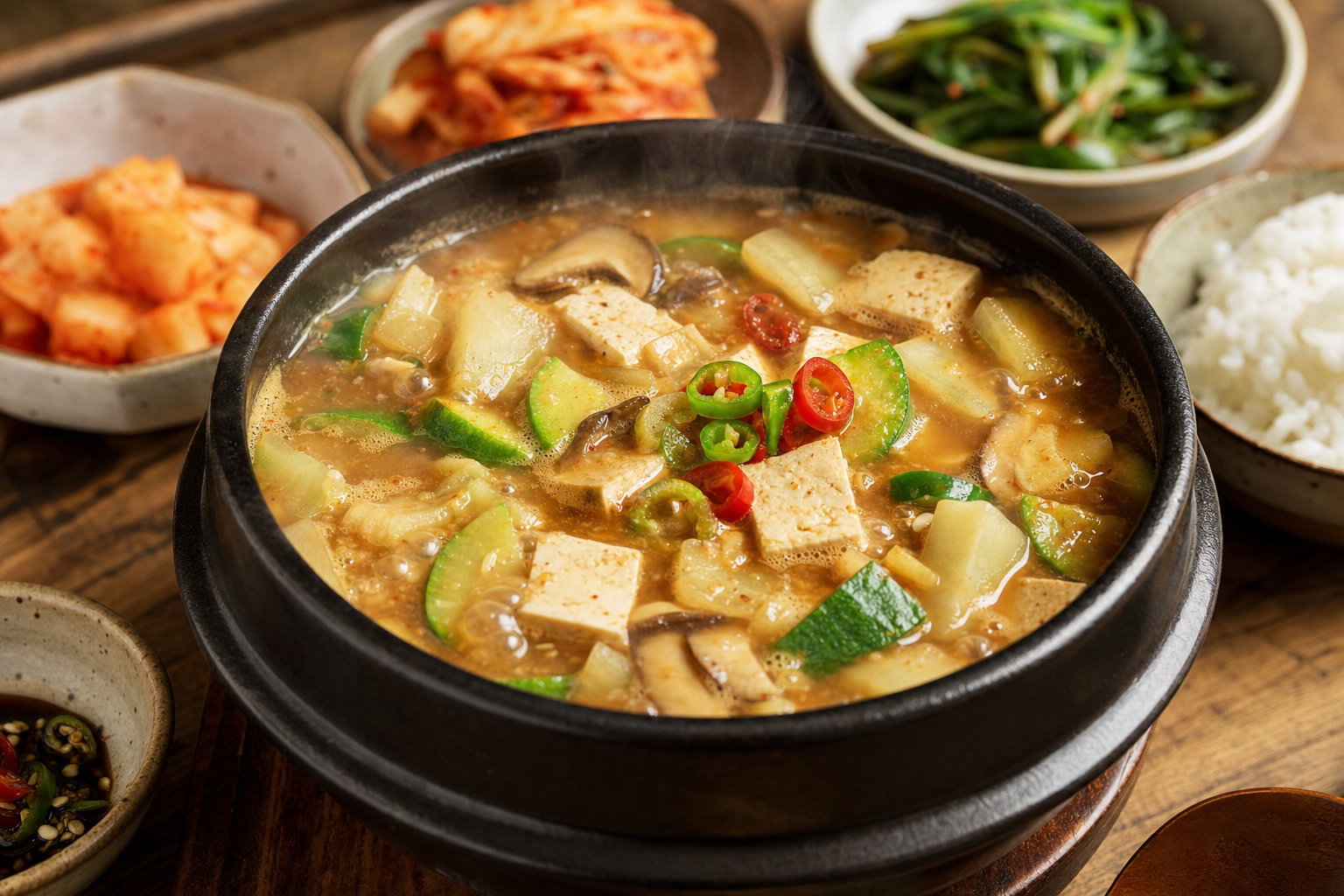
Korean napa cabbage soup with soybean paste: savory anchovy broth, tender cabbage
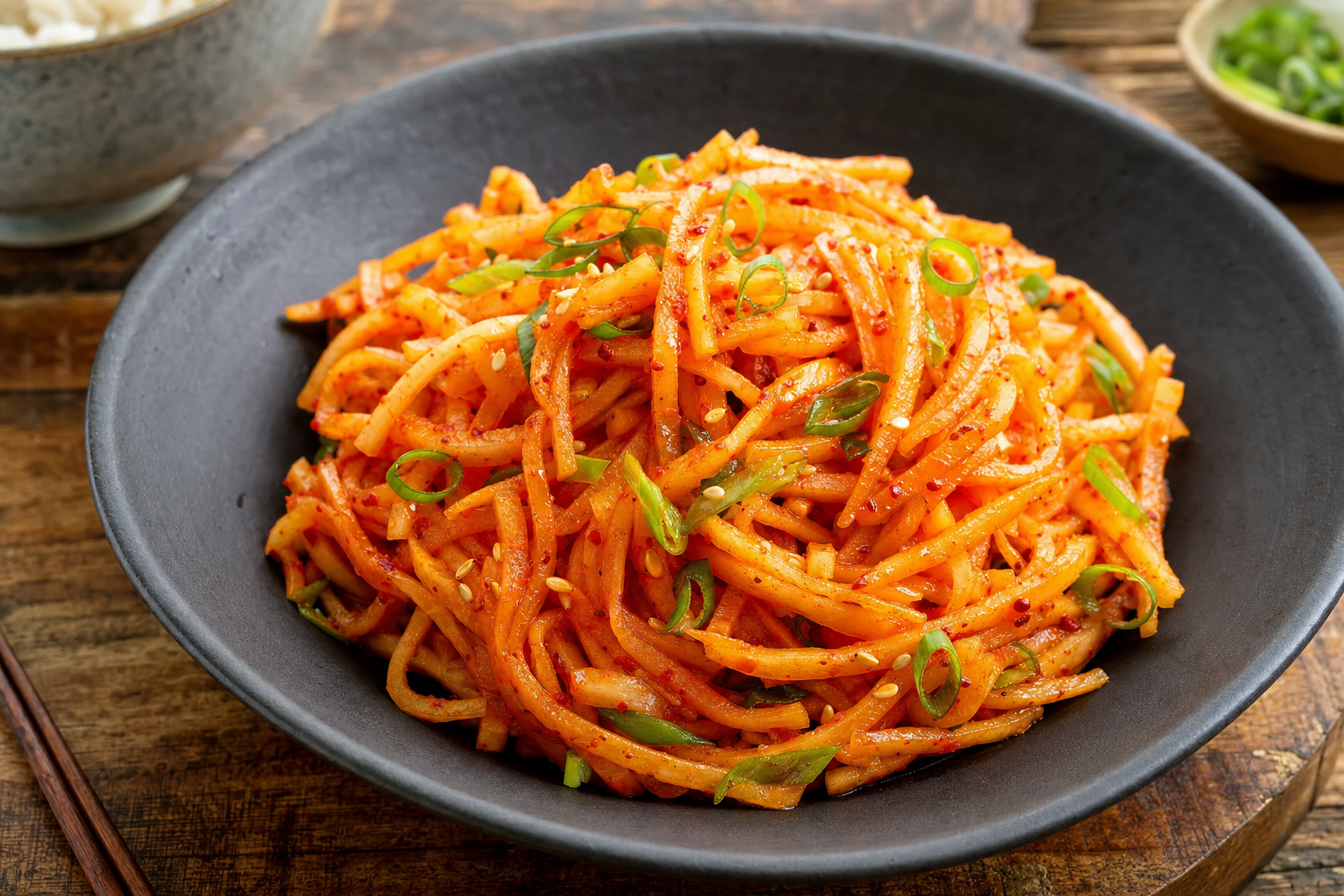
This soup of napa cabbage and doenjang is everyday food in Korea: quick, filling, and exactly what you want when you need something warm alongside a bowl of rice. The base is a broth made from dried anchovies — or, in the most traditional version, the cloudy water left over from rinsing rice, which gives the soup real body. It goes to the table with rice, kimchi and a few banchan, maybe stir-fried anchovies or dried shrimp.
Ingredients
- 12⅓ ozNapa cabbageleaves washed, cut into bite-size pieces of about 5 cm
- 2 tbspDoenjang (Korean soybean paste)dissolve in the broth, press through a sieve if needed
- 2 tspGochujang (Korean red chili paste)stirred in together with the soybean paste, roughly a 2:1 ratio
- 5⅛ cupsAnchovy brothsoup base
- 12Dried anchoviesfor the broth, boil uncovered for 10 minutes and remove afterwards (optional)
- 3 clovesGarlicfinely minced
- 2Spring onioncut into pieces of about 5 cm, added at the end
- 1 tbspSoy sauceto season the broth (optional)
- 5 ozBeefcut against the grain into thin bite-size strips, briefly seared (optional)
- Saltto taste, only after cooking
- Black pepperto taste (optional)
Method
- For the broth, put the dried anchovies into water or rice rinsing water and boil uncovered for about 10 minutes, then fish out the anchovies. If you prefer, simply use plain rice rinsing water instead.
- Wash the napa cabbage, trim away any damaged leaf edges and cut the leaves into bite-size pieces of about 5 cm.
- If you want beef in the soup, cut the stew meat against the grain into thin strips and sear it briefly in the pot with some of the minced garlic and a little oil, then pour in the broth.
- Dissolve the doenjang and gochujang in the broth — press them through a sieve or stir vigorously so no lumps remain. Season with the light Korean soup soy sauce.
- Bring the broth to a boil, add the napa cabbage, cover and bring it back to a boil.
- Lower the heat and let the soup simmer until the cabbage is tender, skimming off any foam that rises to the surface.
- Add the remaining garlic and the spring onions and let them cook along for a few more minutes.
- Season with salt and black pepper only at the very end, and serve hot with rice and side dishes.
Tips and variations
With briefly seared beef the soup turns heartier; made purely with rice rinsing water — no meat, no anchovies — it stays much lighter, and beef broth works as a base too. For a milder bowl, leave out the gochujang and season with doenjang and soup soy sauce alone. You can swap part of the soybean paste for Japanese miso, which gives a gentler, slightly sweet note, though that's considered untypical for this dish. Young spring cabbage (eolgari-baechu) can stand in for napa cabbage, and how coarsely or finely you cut the leaves is purely a matter of taste — it mainly changes the look and the bite. Serve with rice, kimchi and more banchan such as stir-fried anchovies or dried shrimp.
Allergens
Contains: Fish, Cereals containing gluten, Soybeans
These notes follow from this recipe's ingredient list. Ready-made products and brands may contain further allergens — please check the packaging yourself.
Something not right?
This recipe was put together from independent sources and checked before publishing. Even so, a mistake can slip through — an amount that does not add up, a step that does not work as written. If you spot something, write to us: we will look into it and put it right.