Gangwon · 45 min · Vegetarian · Main course · For beginners
Bibim Makguksu
In German: Kalte Buchweizennudeln mit scharfer Gochujang-Sauce · In English: Spicy Cold Buckwheat Noodles
For 4 servings · US units
Ice-cold buckwheat noodles in a spicy-sweet gochujang sauce with crisp vegetables
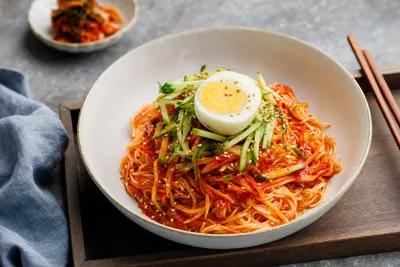
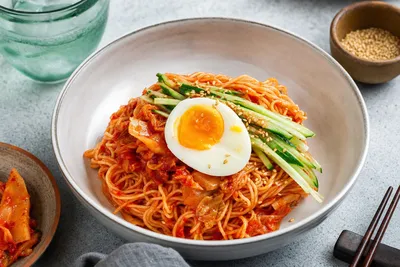
Bibim Makguksu comes from Gangwon, and it's exactly what you crave on a sweltering summer day: chilled buckwheat noodles, a hot, sweet-and-tangy gochujang sauce and a pile of fresh vegetables on top. You toss everything together right in the bowl, so every bite is cool, punchy and crunchy all at once.
Ingredients
- 15¾ ozdriedThin, greyish Korean noodles made from buckwheat flour and starch, strikingly chewy and elastic, used mainly for cold noodle dishes.Substitute: There is no truly good substitute, because the characteristic chewiness comes from the starch. Japanese soba match the buckwheat flavour but are soft and break easily; Korean sweet potato glass noodles have the chewiness but neither the colour nor the taste. In a pinch, use thin soba and expect a noticeably softer dish.Read more
- 7 tbspbase of the sauceKorean chili paste made from glutinous rice, fermented soybeans, chili powder and salt, thick, hot, salty and faintly sweet.Substitute: There is no real substitute, because the fermented depth and the sticky sweetness together carry the dish. As a stopgap, light miso paste stirred with Korean chili powder or other mild chili flakes and a little honey or sugar roughly matches the salt, heat and sweetness, but tastes flatter and less rounded. Chili sauces such as sriracha are too thin and too sour and change the dish noticeably.Read more
- 4 tbspVinegarwhite or rice vinegar, for the sauce
- 4 tbspSugarwhite or light brown, for the sauce
- 6 clovesGarlicminced, for the sauce
- 1Onionsmall, blended into the sauce
- 1½ tbspadded just before servingDark oil pressed from toasted sesame seeds, with a strong, nutty, roasted aroma; usually added at the end in small amounts as a seasoning.Substitute: There is no real substitute, as no other oil carries the roasted aroma; at a pinch, a neutral oil with freshly pan-toasted, crushed sesame seeds helps, though the flavour stays clearly weaker.Read more
- 4 tspsesame seedstoasted, for sprinkling
- 5¼ ozCucumberjulienned or thinly sliced
- 2½ ozCarrotpeeled, julienned
- 2Egghard-boiled, halved, as topping
- 4 tbspcoarse, for extra heat in the sauce (optional)Korean chili flakes made from sun-dried red chilies, ground coarse or fine. Bright red, fruity, mild to medium hot and slightly smoky.Substitute: The closest match is Aleppo pepper (pul biber) from a Turkish grocery, which is similarly fruity and mild but oilier, often salted and slightly tangier. In a pinch, mix sweet paprika with a little cayenne; this roughly matches colour and heat but not the fruitiness or texture. Ordinary crushed red pepper flakes are too hot to use in the usual quantities.Read more
- 3 tbspSoy saucefor the sauce (optional)
- 2Applesmall, blended into the sauce; pear also works (optional)
- 1 tbspfor shine and sweetness of the sauce (optional)A clear, thick sugar syrup made from corn starch, mildly sweet, used in Korean cooking for gloss and body.Substitute: Glucose syrup from the baking aisle or rice syrup from a health food store behaves almost the same; light honey also works but has a pronounced flavour, is sweeter and scorches more easily.Read more
- 8½ ozas topping (optional)Lacto-fermented napa cabbage with chilli, garlic, ginger and usually fish sauce, sour, spicy and savoury.Substitute: There is no true substitute: sauerkraut with chilli flakes, garlic and a dash of fish sauce matches the sourness, but neither the depth of flavour nor the crisp bite. With some time to spare, making your own kimchi is the better route.Read more
- 2crumbled or sliced, as topping (optional)Caution: Kombu and other brown seaweeds are very high in iodine and should be eaten only in small amounts rather than in large daily portions.Dried seaweed, in Korean cooking mainly miyeok (wakame), gim (nori) and dasima (kombu), with a salty, briny flavour.Substitute: There is no real substitute outside seaweed, as nothing else provides the briny flavour and texture; Japanese wakame, nori or kombu are the same seaweeds as the Korean ones and can be used directly.Read more
- 2⅛ ozjulienned (optional)Large, serrated leaves of Korean perilla, a plant of the mint family, strongly aromatic with a note somewhere between mint, anise and fresh grass.Substitute: There is no equivalent substitute. Japanese shiso, a related variety, comes closest, but it is smaller, more delicate and tastes brighter and more lemony. For wrapping you can fall back on lettuce leaves, but then the very aroma that defines the dish is missing.Read more
Method
- Blend the sauceFor the sauce, blend the gochujang, vinegar, sugar, minced garlic and onion until smooth. If you like, a few extras can go into the blender too. Gochugaru brings more heat, and soy sauce adds depth. The apple, or a pear instead, adds a gentle fruity sweetness. Corn syrup gives the sauce a glossy sheen and a little extra sweetness. Keep the sesame oil and sesame seeds aside for serving.
- Chill and let it restCover the sauce and put it in the fridge. If you have time, let it sit for at least 1 hour or even overnight so the flavors really come together.
- Prepare the eggsHard-boil the eggs, cool them under cold water, peel them and cut them in half.
- Cut the vegetablesCut the cucumber and the peeled carrot into thin matchsticks; the cucumber can also be thinly sliced. If you're using perilla leaves, cut them into fine strips too.
- Cook the noodles al denteBring a large pot of water to a boil and cook the buckwheat noodles for 3 to 4 minutes, or according to the package. Stay close, because the noodles should keep their bite and must not turn mushy.
- Rinse cold and drainDrain the noodles and rinse them thoroughly under cold running water until they're completely cold. Rub them between your hands as you rinse to wash off the starch, then let them drain well.
- Assemble and tossDivide the noodles among bowls and top with the cucumber, carrot, egg halves and the perilla strips if using. If you like, add some kimchi and crumbled seaweed as well. Spoon the cold sauce over, drizzle with sesame oil, sprinkle with sesame seeds, toss everything together and serve right away while it's cold.
Tips and variations
A splash of lemon-lime soda like Sprite in the sauce makes it a touch brighter and sweeter. When boiling the noodles, try this: every time the water foams up, pour in half a cup of cold water so the noodles cook evenly. If you're short on time, a packaged kit with wheat-buckwheat noodles and its own bibim sauce does the job, and angel hair pasta can stand in for buckwheat noodles in a pinch. For a crowd, add plenty of leafy greens such as green and red cabbage, red leaf lettuce and perilla, and put the sauce on the table separately so everyone can mix their bowl as spicy as they like.
Allergens
Contains: Eggs, Cereals containing gluten, Sesame, Soybeans
These notes follow from this recipe's ingredient list. Ready-made products and brands may contain further allergens — please check the packaging yourself.
Something not right?
This recipe was put together from independent sources and checked before publishing. Even so, a mistake can slip through — an amount that does not add up, a step that does not work as written. If you spot something, write to us: we will look into it and put it right.