Korea · 55 min · Meat · Main course · For beginners
Dakdoritang
In German: Scharfer koreanischer Hähnchen-Eintopf
For 4 servings · US units
Bone-in chicken and potatoes braised in a spicy-sweet gochujang sauce
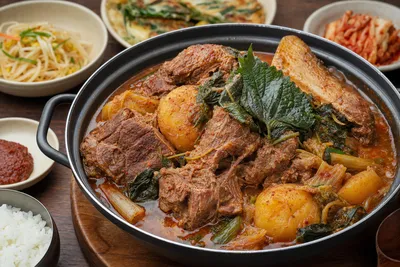
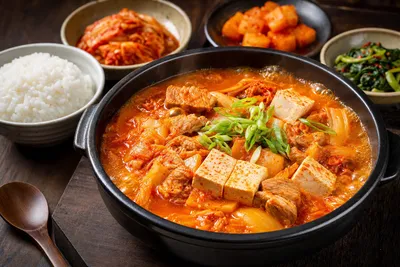
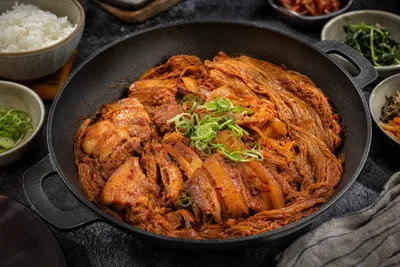
Dakdoritang, also known as Dak Bokkeum Tang, is exactly what you want on the table on a cold winter night: bone-in chicken, chunky potatoes and carrots slowly going tender in a spicy-sweet sauce of gochujang and gochugaru. It comes with a bowl of steamed rice to soak up all that red, slightly glossy sauce. One pot, just under an hour, and everyone at the table is happy.
Ingredients
- 2¼ lbchickenthighs, drumsticks or legs, cut into bite-sized pieces
- 14⅛ ozPotatowaxy, peeled, cut into large chunks
- 6 ozCarrotpeeled, cut into large chunks
- 1Onionroughly chopped or sliced
- 5 clovesGarlicfinely minced, for the seasoning sauce
- ⅓ ozGingerfinely minced or grated
- 2 tbspfor the seasoning sauceKorean chili paste made from glutinous rice, fermented soybeans, chili powder and salt, thick, hot, salty and faintly sweet.Substitute: There is no real substitute, because the fermented depth and the sticky sweetness together carry the dish. As a stopgap, light miso paste stirred with Korean chili powder or other mild chili flakes and a little honey or sugar roughly matches the salt, heat and sweetness, but tastes flatter and less rounded. Chili sauces such as sriracha are too thin and too sour and change the dish noticeably.Read more
- 3 tbspKorean chili flakes, adjust to desired heatKorean chili flakes made from sun-dried red chilies, ground coarse or fine. Bright red, fruity, mild to medium hot and slightly smoky.Substitute: The closest match is Aleppo pepper (pul biber) from a Turkish grocery, which is similarly fruity and mild but oilier, often salted and slightly tangier. In a pinch, mix sweet paprika with a little cayenne; this roughly matches colour and heat but not the fruitiness or texture. Ordinary crushed red pepper flakes are too hot to use in the usual quantities.Read more
- 4 tbspSoy saucefor the seasoning sauce
- 2 tbspSugarraw sugar works too
- 2 tbspor mirinA clear, mild wine made from fermented rice, used in Korean cooking mainly for marinades and to tame fishy smells.Substitute: Dry sherry or a dry white wine come closest, though they taste a little fruitier. If you use Japanese mirin the dish turns sweeter, so cut back slightly on the sugar in the recipe.Read more
- 1¼ cupsWaterbraising liquid, chicken stock can be used instead
- 1 tbsptoasted, stirred in at the endDark oil pressed from toasted sesame seeds, with a strong, nutty, roasted aroma; usually added at the end in small amounts as a seasoning.Substitute: There is no real substitute, as no other oil carries the roasted aroma; at a pinch, a neutral oil with freshly pan-toasted, crushed sesame seeds helps, though the flavour stays clearly weaker.Read more
- 2Scallionscut into lengths or rings, added at the end or as garnish
- 1 tspsesame seedstoasted, for garnish
- Black pepperground, to taste
- Saltto season
- ricesteamed, for serving
- 1 tbspvegetable oilonly for searing, if the chicken is browned first (optional)
- 3thinly sliced, added towards the end (optional)Large, serrated leaves of Korean perilla, a plant of the mint family, strongly aromatic with a note somewhere between mint, anise and fresh grass.Substitute: There is no equivalent substitute. Japanese shiso, a related variety, comes closest, but it is smaller, more delicate and tastes brighter and more lemony. For wrapping you can fall back on lettuce leaves, but then the very aroma that defines the dish is missing.Read more
- ½ tbspfermented soybean paste, into the seasoning sauce (optional)Korean fermented soybean paste, dark, coarse and strongly salty with a deep, earthy flavour.Substitute: Dark, robust miso comes closest, but it is milder, sweeter and smoother; use a little more and add it towards the end of cooking. It does not quite reach the pungent, deep fermented note of doenjang.Read more
Method
- Cut the vegetables into chunksCut the potatoes and carrots into big chunks so they hold together during the braise. Roughly chop or slice the onion, and cut the scallions into lengths or rings.
- Mix the seasoning sauceMix the seasoning sauce in a bowl: stir together the gochujang, gochugaru, soy sauce, sugar, rice wine, minced garlic, ginger and a little ground black pepper until smooth. If you like, add a spoonful of doenjang too.
- Blanch the chicken brieflyBring a pot of water to a boil and drop in the chicken pieces briefly, just until foam rises to the surface. Drain them; this keeps the flavor of the sauce cleaner later on.
- Braise the chicken in the saucePut the blanched chicken into a pot with the seasoning sauce and the water, or use chicken stock instead of water if you prefer. Bring everything to a boil, then cover and let it simmer for about 10 to 15 minutes.
- Add the vegetables and simmerNow add the potatoes, carrots and onion. Let everything simmer for another 15 to 20 minutes, until the chicken is tender and a knife slides easily into the potatoes. If you're using perilla leaves, add the sliced leaves in the last few minutes.
- Reduce the sauce uncoveredTake the lid off and let it bubble uncovered for a few more minutes, until the sauce has thickened slightly and clings to the vegetables.
- Finish and serve with riceFinally, stir in the scallions, toasted sesame oil and sesame seeds, then season with salt and pepper. Serve the dakdoritang straight from the pot with steamed rice.
Tips and variations
Instead of blanching, you can sear the chicken in a little neutral oil right in the pot for more roasted flavor. If you want it milder, skip the gochugaru and let the gochujang bring all the heat, ideally with chicken stock instead of water. Oyster sauce in place of soy sauce or a little doenjang rounds out the sauce, a fresh red chili at the end adds an extra kick, and you can leave out the carrot altogether. Short on time? A pressure cooker does it in 10 minutes at high pressure (reduce the sauce afterwards if needed); in a slow cooker it takes about 4 hours on high or 6 hours on low. Set the pot in the middle of the table with a bowl of rice for everyone and let people help themselves.
Allergens
Contains: Cereals containing gluten, Sesame, Soybeans, Sulphur dioxide and sulphites
These notes follow from this recipe's ingredient list. Ready-made products and brands may contain further allergens — please check the packaging yourself.
Something not right?
This recipe was put together from independent sources and checked before publishing. Even so, a mistake can slip through — an amount that does not add up, a step that does not work as written. If you spot something, write to us: we will look into it and put it right.