Korea · 90 min · Meat · Main course · For beginners
Kimchi-Jjim
In German: Kimchi-Schmortopf mit Schweinebauch · In English: Braised Kimchi with Pork
For 4 servings · US units
Braised pork belly with long-aged kimchi
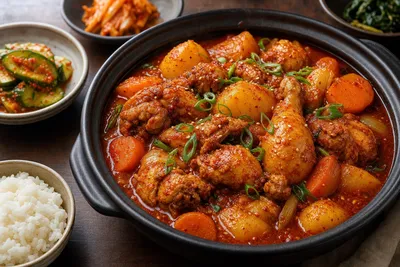
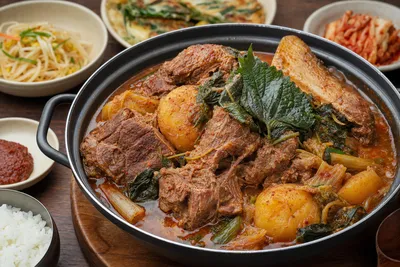
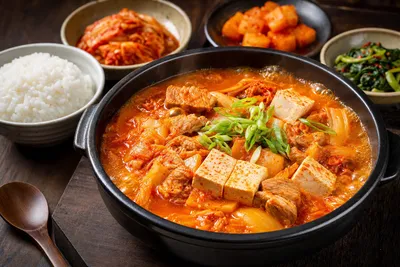
Kimchi-jjim is what happens when you give old, properly sour kimchi (mugeunji) some time and a slab of pork belly: mellow, deep and savoury instead of sharp and tangy. Unlike kimchi-jjigae, there's very little liquid left in the pot here — the kimchi braises rather than swims. It's an everyday dish you cut up at the table with scissors and tongs and eat with a bowl of rice and a few banchan.
Ingredients
- 1¾ lbwell-aged, with its juices; whole or in large piecesLacto-fermented napa cabbage with chilli, garlic, ginger and usually fish sauce, sour, spicy and savoury.Substitute: There is no true substitute: sauerkraut with chilli flakes, garlic and a dash of fish sauce matches the sourness, but neither the depth of flavour nor the crisp bite. With some time to spare, making your own kimchi is the better route.Read more
- 1¾ lbPork bellywhole slab or thick-cut; pork butt also used
- 1⅔ cupsWaterfor braising, should not fully cover the ingredients; rice-rinsing water as an alternative
- 2 tbspGarlicminced
- 1½ tbspfor colour and heatKorean chili flakes made from sun-dried red chilies, ground coarse or fine. Bright red, fruity, mild to medium hot and slightly smoky.Substitute: The closest match is Aleppo pepper (pul biber) from a Turkish grocery, which is similarly fruity and mild but oilier, often salted and slightly tangier. In a pinch, mix sweet paprika with a little cayenne; this roughly matches colour and heat but not the fruitiness or texture. Ordinary crushed red pepper flakes are too hot to use in the usual quantities.Read more
- 1 tbspfor savoury depthKorean fermented soybean paste, dark, coarse and strongly salty with a deep, earthy flavour.Substitute: Dark, robust miso comes closest, but it is milder, sweeter and smoother; use a little more and add it towards the end of cooking. It does not quite reach the pungent, deep fermented note of doenjang.Read more
- 1 tbspSoy saucefor seasoning
- 1 tbspSugarbalances the acidity of the aged kimchi
- 1Onionthickly sliced, layered at the bottom of the pot
- 2spring onionscut on the bias, added near the end or as garnish
- 2sliced on the bias, added near the end (optional)A fresh chili picked unripe, grassy and bright, ranging from mild to very hot depending on the variety.Substitute: For the mild variety, use long green peppers or mild green peppers such as Italian frying peppers; for the hot one, jalapeño or serrano. The fresh character stays the same, and you only need to adjust the amount for heat.Read more
- 1 tbspGingerminced into the seasoning, or sliced for parboiling the pork
- 2 tbspto marinate the meat and reduce gaminess (optional)A clear, mild wine made from fermented rice, used in Korean cooking mainly for marinades and to tame fishy smells.Substitute: Dry sherry or a dry white wine come closest, though they taste a little fruitier. If you use Japanese mirin the dish turns sweeter, so cut back slightly on the sugar in the recipe.Read more
- Black pepperfreshly ground, for the meat
- 14⅛ ozTofusliced, shingled between the pork at the end (optional)
- 8⅛ ozbraised along with the dish (optional)Korean tteok: steamed and pounded rice dough, usually shaped into finger-thick sticks or oval slices. Firmly chewy and mild, not to be confused with puffed rice cakes.Substitute: There is no good substitute. Japanese mochi is made from glutinous rice, turns soft when cooked and melts away. Gnocchi or short thick pasta will carry the sauce but lack the chewy, springy bite these dishes are built around.Read more
- 1 tspdrizzled before serving (optional)Dark oil pressed from toasted sesame seeds, with a strong, nutty, roasted aroma; usually added at the end in small amounts as a seasoning.Substitute: There is no real substitute, as no other oil carries the roasted aroma; at a pinch, a neutral oil with freshly pan-toasted, crushed sesame seeds helps, though the flavour stays clearly weaker.Read more
Method
- Season the pork bellyLeave the pork belly whole or cut it into thick pieces, season it with rice wine and freshly ground black pepper and let it sit briefly.
- Parboil the pork if desiredIf you like, parboil the meat with sliced ginger in water for 10 minutes, drain it, rinse it under cold water and clean out the pot — the pork tastes milder this way and the kimchi holds together better later on.
- Mix the seasoning pasteFor the seasoning mixture, stir together the garlic, gochugaru, doenjang, soy sauce, sugar and minced ginger.
- Layer onion, kimchi and porkLay the onion slices over the bottom of the pot, then layer the kimchi with its juices and the pork on top.
- Add seasoning and waterSpoon the seasoning mixture over everything and pour in the water — the ingredients shouldn't be fully covered, or your braise turns into a soup.
- Braise tender and reduceCover and bring to a boil over high heat, then turn the heat down and braise, still covered, until the meat is tender. Finally take the lid off and let it keep bubbling gently until the liquid has reduced right down.
- Add spring onions and chiliesNear the end, add the spring onions, cut on the bias, and the green chilies too, if you're using them.
- Slice the pork, add tofuLift out the meat, slice it and return it to the pot; if you like, shingle slices of tofu in between and let everything warm through for a moment.
- Finish and serve with riceTaste and adjust, drizzle with sesame oil if you want and serve with steamed rice; at the table, hold the kimchi with tongs and cut it into pieces with scissors.
Tips and variations
Instead of a whole slab of pork belly, pork butt cut into medium-thick slices works just as well. Rice-rinsing water in place of plain water gives the braising liquid more body. Rice cakes can go into the pot near the end and braise along with everything else. If you like your kimchi with some bite, lift it out after about 20 minutes and let just the pork carry on braising. Another version leaves out the onion layer and lays the whole kimchi straight on the bottom of the pot, with only the core trimmed off. For a fresher finish, scatter a few extra spring onions over the pot along with the sesame oil. Korean rice cooked with black rice is lovely alongside, and a few banchan round out the meal.
Allergens
Contains: Cereals containing gluten, Soybeans
May contain if you use the optional ingredients: Sesame, Sulphur dioxide and sulphites
These notes follow from this recipe's ingredient list. Ready-made products and brands may contain further allergens — please check the packaging yourself.
Something not right?
This recipe was put together from independent sources and checked before publishing. Even so, a mistake can slip through — an amount that does not add up, a step that does not work as written. If you spot something, write to us: we will look into it and put it right.