Korea · 2,8 h · Meat · Main course · For beginners
Gamjatang
In English: Spicy Pork Bone Stew
For 4 servings · US units
Korean pork bone stew with potatoes, napa cabbage and perilla
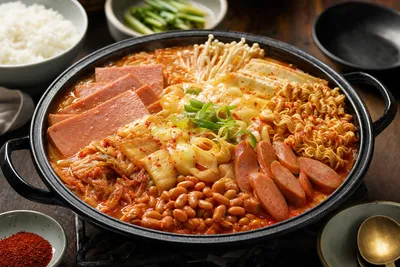
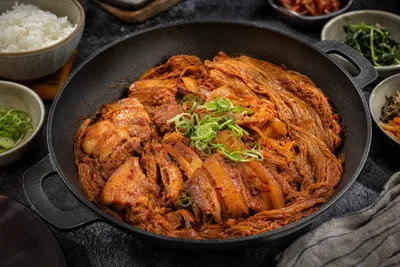
Gamjatang is Korean everyday cooking at its best: meaty pork neck bones simmered until the broth turns milky and the meat slides off, then potatoes, napa cabbage and a punchy paste of doenjang, gochujang and gochugaru go in. In Seoul restaurants the pot sits right on the table and keeps bubbling away while you eat, and there's no reason not to do the same at home. Serve it with steamed rice and a few mild banchan — a bean sprout salad, some jeon — and a bowl of stew turns into a full meal.
Ingredients
- 3⅓ lbchoose meaty pieces; pork spine or ribs also workMeaty vertebrae from the pork neck that give a rich, slightly gelatinous broth when simmered for a long time.Substitute: Pork back bones work just as well, and spare ribs will do, though they give a somewhat less rich broth and less tender meat to pick off the bone.Read more
- 8½ cupsWaterfor the broth; extra water for soaking and parboiling
- 4Potatostarchy, peeled and cut into large chunks
- 10½ ozNapa cabbageleaves, parboiled or simmered in the stew
- 8sliced into strips, stirred in at the endLarge, serrated leaves of Korean perilla, a plant of the mint family, strongly aromatic with a note somewhere between mint, anise and fresh grass.Substitute: There is no equivalent substitute. Japanese shiso, a related variety, comes closest, but it is smaller, more delicate and tastes brighter and more lemony. For wrapping you can fall back on lettuce leaves, but then the very aroma that defines the dish is missing.Read more
- 2 tbspthickens and rounds off the broth; ground sesame as substituteRoasted and ground seeds of the perilla plant, a coarse grey-brown powder with a nutty, faintly earthy and herbal flavour.Substitute: Freshly toasted ground sesame comes closest and gives the nutty note, but not the earthy, herbal tone, and it thickens soups less, so they stay thinner and less creamy.Read more
- 1Onionhalved, for the broth
- 8 clovesGarlicsome whole for the broth, the rest minced for the seasoning paste
- ½ ozGingersliced for the broth, a little grated for the seasoning paste
- 4Scallionswhite part for the broth, green cut into lengths at the end
- 2 tbspfor the seasoning pasteKorean chili flakes made from sun-dried red chilies, ground coarse or fine. Bright red, fruity, mild to medium hot and slightly smoky.Substitute: The closest match is Aleppo pepper (pul biber) from a Turkish grocery, which is similarly fruity and mild but oilier, often salted and slightly tangier. In a pinch, mix sweet paprika with a little cayenne; this roughly matches colour and heat but not the fruitiness or texture. Ordinary crushed red pepper flakes are too hot to use in the usual quantities.Read more
- 2 tbspfor the seasoning pasteKorean fermented soybean paste, dark, coarse and strongly salty with a deep, earthy flavour.Substitute: Dark, robust miso comes closest, but it is milder, sweeter and smoother; use a little more and add it towards the end of cooking. It does not quite reach the pungent, deep fermented note of doenjang.Read more
- 1½ tbspfor the seasoning pasteKorean chili paste made from glutinous rice, fermented soybeans, chili powder and salt, thick, hot, salty and faintly sweet.Substitute: There is no real substitute, because the fermented depth and the sticky sweetness together carry the dish. As a stopgap, light miso paste stirred with Korean chili powder or other mild chili flakes and a little honey or sugar roughly matches the salt, heat and sweetness, but tastes flatter and less rounded. Chili sauces such as sriracha are too thin and too sour and change the dish noticeably.Read more
- 1 tbspto salt the seasoning pasteA pale, very salty Korean soy sauce made from fermented soybean blocks, used to season soups and vegetable side dishes.Substitute: The closest match is Japanese light soy sauce (usukuchi), which is also pale and salty but milder and lacks the earthy fermented note of the Korean sauce. Ordinary soy sauce is only a stopgap: it darkens broth and vegetables and tastes sweeter, so use less of it and make up the difference with a little salt.Read more
- 1 tbspanchovy sauce, for depth of flavourA clear, amber seasoning sauce made from salted, fermented fish, in Korea usually anchovies; very salty and deeply savoury.Substitute: Thai or Vietnamese fish sauce can be used one for one; it tastes slightly different but works well. There is no true fish-free substitute: light soy sauce with a pinch of salt provides salt and some savouriness, but not the fermented fish note.Read more
- 2 tbspto counter the smell of the meatA clear, mild wine made from fermented rice, used in Korean cooking mainly for marinades and to tame fishy smells.Substitute: Dry sherry or a dry white wine come closest, though they taste a little fruitier. If you use Japanese mirin the dish turns sweeter, so cut back slightly on the sugar in the recipe.Read more
- Black pepperwhole peppercorns for the broth, ground to taste
- Saltto taste and for the cabbage blanching water
- 2sliced or cut into lengths, added at the end (optional)A fresh chili picked unripe, grassy and bright, ranging from mild to very hot depending on the variety.Substitute: For the mild variety, use long green peppers or mild green peppers such as Italian frying peppers; for the hot one, jalapeño or serrano. The fresh character stays the same, and you only need to adjust the amount for heat.Read more
- 1 ozonly wilted briefly at the end (optional)The tender leaves and stems of the garland chrysanthemum, a leafy green with a strong herbal, slightly bitter aroma.Substitute: There is no real substitute, because the peculiar chrysanthemum aroma is not found elsewhere. The closest approach is watercress or rocket mixed with a little celery leaf, which hints at the bitterness and herbal note; young spinach matches only the texture and makes the dish noticeably milder.Read more
- 3½ ozadded right at the end (optional)Sprouted mung beans with a crisp white stem and a small green-hulled head, juicy and mild.Substitute: Jarred sprouts are soft and lose the crunch that is the whole point, so they only suit soups. True soybean sprouts, with their large yellow heads, are a separate ingredient with a nuttier taste that needs longer cooking, and stand in only partly.Read more
Method
- Soak the bonesSoak the pork neck bones in cold water for 30 to 60 minutes, changing the water once or twice along the way, then drain.
- Blanch and rinse the bonesCover the bones with fresh water in a pot, bring to a boil and let them boil hard for 5 to 10 minutes. Drain, rinse the bones under cold running water and rub off any clinging scum, then wash out the pot thoroughly.
- Simmer the brothReturn the bones to the pot with fresh water, the halved onion, whole garlic cloves, sliced ginger, the white parts of the scallions and a few peppercorns. Cover and simmer gently for 45 to 90 minutes, until the meat feels tender.
- Mix the seasoning pasteMeanwhile, stir together the seasoning paste: gochugaru, doenjang, gochujang, minced garlic, grated ginger, soup soy sauce, fish sauce, rice wine and some of the ground perilla seeds, mixed until smooth.
- Prep cabbage and potatoesBlanch the napa cabbage in salted water for 1 to 5 minutes, shock it in cold water, squeeze it dry and cut it into pieces. Peel the potatoes, cut them into large chunks and parboil them until almost tender.
- Strain the brothStrain the broth, discard the spent aromatics and slip the bones back into the clear broth.
- Cook vegetables with the pasteAdd the potatoes, cabbage and the seasoning paste, and cook for 10 to 15 minutes, until the potatoes are done.
- Add herbs and greensLay the shredded perilla leaves and scallion greens on top, plus green chilies, crown daisy greens or mung bean sprouts if you like, and let everything steep for 2 to 3 minutes.
- Season and serveSeason with the remaining ground perilla seeds, salt and freshly ground black pepper, and serve the stew piping hot with steamed rice.
Tips and variations
For a simpler route, stir the seasoning paste straight into the cooking liquid of the parboiled bones and finish everything together — the potatoes and cabbage can go in raw at that point. Another lovely version uses aged kimchi, carrots, a bay leaf and a little plum syrup (maesil-cheong), with a drizzle of perilla oil at the end; remove the bay leaf before serving. Enoki mushrooms or shishito peppers make good extra add-ins too. If the smell of the meat bothers you, add a spoonful of ground coffee along with rice wine and peppercorns to the parboiling water, and toasted ground sesame stands in nicely for ground perilla seeds. Best of all, set the pot on a burner in the middle of the table and let it keep simmering while you eat, with rice and mild banchan alongside.
Allergens
Contains: Fish, Cereals containing gluten, Soybeans, Sulphur dioxide and sulphites
These notes follow from this recipe's ingredient list. Ready-made products and brands may contain further allergens — please check the packaging yourself.
Something not right?
This recipe was put together from independent sources and checked before publishing. Even so, a mistake can slip through — an amount that does not add up, a step that does not work as written. If you spot something, write to us: we will look into it and put it right.