Korea · 75 min · Meat · Main course · For beginners
Dakjjim
In German: Geschmortes Hähnchen nach koreanischer Art · In English: Korean Braised Chicken
For 4 servings · US units
Chicken braised in sweet-savoury soy sauce with potatoes and glass noodles
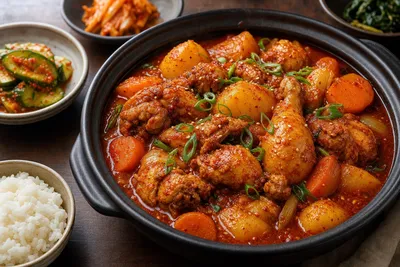
In Korea you'll also hear Dakjjim called Andong Jjimdak, braised chicken from Andong. The chicken is chopped through the bone into pieces and braised with potatoes and carrots in a sweet, salty soy sauce, and right at the end the glass noodles soak up all that glossy liquid. Serve it with a bowl of steamed rice, and on a chilly autumn or winter evening there's not much cosier you could put on the table.
Ingredients
- 2¼ lbchickenwhole chicken chopped through the bone into pieces, or thighs or wings
- 2Potatopeeled, cut into large chunks or thick slices
- 1Carrotcut diagonally into large pieces
- 1Onioncut into wedges or large chunks
- 6 clovesGarlicminced, for the sauce
- 1 tbspGingerfreshly grated or thinly sliced
- ½ cupSoy saucebase of the braising sauce, partly dark soy sauce for colour
- 2 tbspSugarwhite or brown, to sweeten the sauce
- 3½ ozsoak in cold water beforehand, add to the sauce at the endTranslucent starch noodles, in Korean cooking usually made from sweet potato starch: glassy, smooth and distinctly chewy once cooked.Substitute: Mung bean glass noodles work, but they are thinner, softer and overcook more quickly, so cook them for less time and expect a less chewy dish.Read more
- 2⅛ cupsWaterbraising liquid, or light chicken stock
- 2 tbspto neutralise meat odour and for the sauceA clear, mild wine made from fermented rice, used in Korean cooking mainly for marinades and to tame fishy smells.Substitute: Dry sherry or a dry white wine come closest, though they taste a little fruitier. If you use Japanese mirin the dish turns sweeter, so cut back slightly on the sugar in the recipe.Read more
- 2Scallionscut into 3–5 cm pieces, added at the end
- 1 tbspstirred in at the endDark oil pressed from toasted sesame seeds, with a strong, nutty, roasted aroma; usually added at the end in small amounts as a seasoning.Substitute: There is no real substitute, as no other oil carries the roasted aroma; at a pinch, a neutral oil with freshly pan-toasted, crushed sesame seeds helps, though the flavour stays clearly weaker.Read more
- 2 tspsesame seedstoasted, for garnish
- 2Chili pepperdried whole or fresh green, for mild heat (optional)
- 2 tbspfor extra depth in the sauce (optional)Thick, dark seasoning sauce made from reduced oyster extract, salty-sweet and deeply savoury.Substitute: Vegetarian mushroom-based oyster sauce comes closest; soy sauce with a little sugar is thinner and lacks the depth and gloss.Read more
- 1 pinchBlack pepperground, in the sauce (optional)
- 4Mushroomscaps cut into large chunks, braised with the vegetables (optional)
Method
- Soak the glass noodlesPut the glass noodles in plenty of cold water and leave them to soak for 20 minutes to 1 hour, until they're pliable.
- Prep the vegetablesPeel the potatoes and cut them into large chunks or thick slices, cut the carrot diagonally into large pieces and the onion into wedges. Cut the scallions into 3–5 cm lengths; if you're using shiitake, cut the caps into large chunks.
- Blanch the chickenChop the chicken through the bone into pieces and rinse it. Drop the pieces into boiling water, blanch them for 3–5 minutes, then rinse them under cold water.
- Bring the braising sauce to a boilPut the soy sauce, sugar, rice wine or mirin, minced garlic, ginger and water or light chicken stock into a pot and bring it to the boil. If you like, stir in the oyster sauce and a pinch of black pepper now.
- Braise the chickenAdd the chicken to the boiling sauce, cover and let it braise over medium heat for 15–20 minutes.
- Add the vegetablesAdd the potatoes, carrot, onion and, if you're using them, the chili peppers and shiitake. Braise for another 15–20 minutes, until the vegetables are tender.
- Add noodles and reduceDrain the glass noodles and add them to the pot along with the scallions. Let everything simmer uncovered, stirring now and then, until the sauce is glossy and has thickened.
- Finish and serveFinally stir in the sesame oil, scatter the toasted sesame seeds over the Dakjjim and serve it with steamed rice.
Tips and variations
For a touch more sweetness, use honey or corn syrup alongside the sugar, and if you're short on time, the chicken can go straight into the sauce without blanching. In a slow cooker, the dish braises for 4 hours on high or 6 hours on low; afterwards reduce the sauce uncovered in a pot, and cook mushrooms in it rather than glass noodles. If you like heat, have a look at Dakdoritang, the stew version made with gochujang and chicken stock, or Dak Galbi, which is stir-fried in a pan. When you serve, don't be shy about spooning that glossy sauce over the rice — that's the whole point.
Allergens
Contains: Cereals containing gluten, Sesame, Soybeans, Sulphur dioxide and sulphites
May contain if you use the optional ingredients: Molluscs
These notes follow from this recipe's ingredient list. Ready-made products and brands may contain further allergens — please check the packaging yourself.
Something not right?
This recipe was put together from independent sources and checked before publishing. Even so, a mistake can slip through — an amount that does not add up, a step that does not work as written. If you spot something, write to us: we will look into it and put it right.