Korea · 3,5 h · Meat · Soup · For confident cooks
Galbitang
In English: Galbitang (Beef Short Rib Soup)
For 4 servings · US units
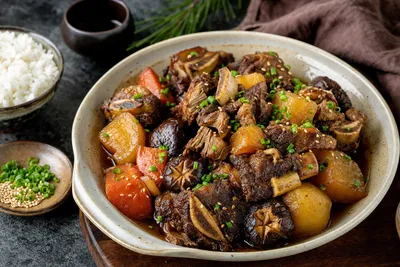
Korean beef short rib soup with clear broth, tender ribs and soft radish
Galbitang is one of those soups that mostly cooks itself: short ribs, radish and a handful of aromatics sit on a low simmer for hours until the broth turns clear and deeply savory. In Korea it comes to the table piping hot with a bowl of rice, kimchi and a few more side dishes, which is what turns a bowl of soup into a full meal. Seasoning happens at the table, everyone to their own taste, with salt, pepper, scallions or a splash of soy sauce.
Ingredients
- 2⅔ lbsoak in cold water, parboil, trim visible fatMeaty bone-in pieces of beef rib, well marbled and rich in connective tissue.Substitute: For braising, beef cheek or oxtail work well and turn similarly succulent and gelatinous. For grilling, thinly sliced rib-eye or sirloin can be used, but without the bone and with less fat.Read more
- 10½ cupsWaterfor the broth
- 10½ ozpeeled, simmered with the meat, later cut bite-size; daikon works tooKorean radish, shorter and stouter than Japanese daikon, with a greenish shoulder — firm, juicy, mildly peppery and slightly sweet.Substitute: Daikon or ordinary white radish work well; they are more watery and softer, cook faster and release more liquid in kimchi, so shorten cooking times and drain more thoroughly after salting.Read more
- 1Onionhalved, simmered as aromatic and removed later
- 6 clovesGarlicwhole for the broth, part minced for seasoning
- ⅓ ozGingerthinly sliced, to cut the meaty smell
- 4Scallionswhite parts for the broth, green rings as garnish
- 2 tbspto season the broth; light-colored, use less if darkA pale, very salty Korean soy sauce made from fermented soybean blocks, used to season soups and vegetable side dishes.Substitute: The closest match is Japanese light soy sauce (usukuchi), which is also pale and salty but milder and lacks the earthy fermented note of the Korean sauce. Ordinary soy sauce is only a stopgap: it darkens broth and vegetables and tastes sweeter, so use less of it and make up the difference with a little salt.Read more
- Saltto taste, also at the table
- Black pepperground to taste, whole peppercorns for the broth
- 2¾ ozdangmyeon, pre-soaked, cooked just before serving (optional)Translucent starch noodles, in Korean cooking usually made from sweet potato starch: glassy, smooth and distinctly chewy once cooked.Substitute: Mung bean glass noodles work, but they are thinner, softer and overcook more quickly, so cook them for less time and expect a less chewy dish.Read more
- 1 tspto season the meat or the bowl (optional)Dark oil pressed from toasted sesame seeds, with a strong, nutty, roasted aroma; usually added at the end in small amounts as a seasoning.Substitute: There is no real substitute, as no other oil carries the roasted aroma; at a pinch, a neutral oil with freshly pan-toasted, crushed sesame seeds helps, though the flavour stays clearly weaker.Read more
- 1Eggwhite and yolk fried separately as thin crepes, julienned as topping (optional)
Method
- Trim and soak the ribsTrim the coarse, visible fat from the beef short ribs, rinse them several times in cold water, then soak them in cold water for 20 to 60 minutes, changing the water once or twice until it stays noticeably clearer.
- Blanch and rinse the ribsBlanch the ribs in vigorously boiling water for 2 to 10 minutes, then drain. Rinse both the meat and the pot thoroughly so nothing clouds the broth later on.
- Start the broth with aromaticsPut the ribs back in the pot with fresh water, the halved onion, four whole garlic cloves, the sliced ginger, the white parts of the scallions and a few whole peppercorns, and bring everything to a boil; set the remaining two garlic cloves aside, they go in later for seasoning.
- Simmer gently and skimTurn the heat down and let the soup simmer gently, uncovered or partly covered, for 1.5 to 2 hours, skimming off the foam as it rises.
- Cook the radishAdd the peeled Korean radish and let it cook until soft and translucent, then lift it out along with the meat.
- Strain and degrease the brothStrain the broth through a fine sieve or a cloth, discard the aromatics and skim off the fat — or chill the soup and lift off the fat once it has set.
- Return meat and seasonCut the radish into bite-size pieces, return it and the meat to the clear broth, and season with Korean soup soy sauce, the two reserved garlic cloves, finely minced, salt and ground black pepper.
- Prepare noodles and egg garnishIf you like, drop the pre-soaked glass noodles into the soup a few minutes before the end to cook through. For the egg garnish, fry the white and the yolk separately as thin crepes and cut them into fine strips.
- Ladle and serveLadle the soup hot into deep bowls, scatter over the scallion rings and the egg strips if using, and serve with rice, kimchi and more side dishes.
Tips and variations
If you're short on time, galbitang works in a pressure cooker too: a short run under pressure to clean the meat, then 30 to 40 minutes of pressure cooking instead of hours of simmering. For a spicy version, stir chili flakes, soy sauce, sesame oil and scallions straight into the individual bowl; the cooked meat is also good seasoned beforehand with garlic, sesame oil, sesame seeds, salt and pepper. You can season with fish sauce instead of or alongside the soy sauce, add the radish only toward the end of cooking, or bone the ribs first and simmer just the meat — and abalone cooked along with it makes a more luxurious bowl. At the table, keep salt, pepper and scallions handy, plus rice, radish kimchi or mixed-grain rice.
Allergens
Contains: Cereals containing gluten, Soybeans
May contain if you use the optional ingredients: Eggs, Sesame
These notes follow from this recipe's ingredient list. Ready-made products and brands may contain further allergens — please check the packaging yourself.
Something not right?
This recipe was put together from independent sources and checked before publishing. Even so, a mistake can slip through — an amount that does not add up, a step that does not work as written. If you spot something, write to us: we will look into it and put it right.