Gyeonggi · 40 min · Meat · Main course · For beginners
Budae Jjigae
In English: Budae Jjigae (Korean Army Stew)
For 4 servings · US units
Korean army stew with kimchi, luncheon meat and sausages, eaten straight from the pot
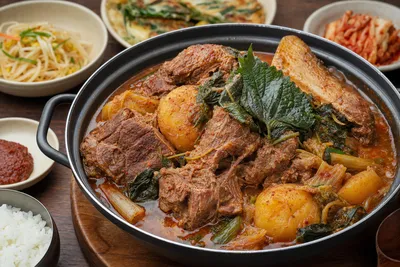
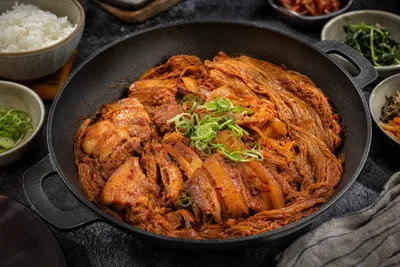
Budae jjigae, known as "army stew," throws together things that shouldn't work on paper: canned luncheon meat (Spam) and hot dogs alongside well-fermented kimchi and chili paste. It comes out of Gyeonggi province and has long since turned into everyday food — the kind you set down in the middle of the table so everyone can dig in. Give it about forty minutes and you've got a pot that's savory, spicy and genuinely comforting.
Ingredients
- 12⅓ ozNapa cabbage kimchi, preferably well fermented, cut into bite-size piecesLacto-fermented napa cabbage with chilli, garlic, ginger and usually fish sauce, sour, spicy and savoury.Substitute: There is no true substitute: sauerkraut with chilli flakes, garlic and a dash of fish sauce matches the sourness, but neither the depth of flavour nor the crisp bite. With some time to spare, making your own kimchi is the better route.Read more
- 7 ozsliced or cut into stripsCured, cooked pork pressed into a firm block and canned; salty and fatty, usually sliced and pan-fried.Substitute: Supermarket luncheon meat or thick-cut cooked ham will do, but they brown less crisply and give stews less salt and fat, so season a little more.Read more
- 5¼ ozHot dog sausagescut into diagonal slices
- 4¼ ozGround porksource 1 uses fatty bacon instead
- 4¼ ozTofufirm, cut into slices about 1 cm thick
- 1Onionthinly sliced
- 3Mushroomsshiitake or button mushroom caps, sliced
- 2Scallionscut into 5 cm pieces
- 4 clovesGarlicfinely minced
- 3⅓ cupsBrothanchovy, beef or chicken stock; sources 2 and 3 simply use water
- 1½ tbspfor the seasoning mixKorean chili flakes made from sun-dried red chilies, ground coarse or fine. Bright red, fruity, mild to medium hot and slightly smoky.Substitute: The closest match is Aleppo pepper (pul biber) from a Turkish grocery, which is similarly fruity and mild but oilier, often salted and slightly tangier. In a pinch, mix sweet paprika with a little cayenne; this roughly matches colour and heat but not the fruitiness or texture. Ordinary crushed red pepper flakes are too hot to use in the usual quantities.Read more
- 1½ tbspfor the seasoning mixKorean chili paste made from glutinous rice, fermented soybeans, chili powder and salt, thick, hot, salty and faintly sweet.Substitute: There is no real substitute, because the fermented depth and the sticky sweetness together carry the dish. As a stopgap, light miso paste stirred with Korean chili powder or other mild chili flakes and a little honey or sugar roughly matches the salt, heat and sweetness, but tastes flatter and less rounded. Chili sauces such as sriracha are too thin and too sour and change the dish noticeably.Read more
- 2 tbspSoy saucefor seasoning, salt as substitute
- 2 tbspadds depth to the seasoning mix (optional)Korean fermented soybean paste, dark, coarse and strongly salty with a deep, earthy flavour.Substitute: Dark, robust miso comes closest, but it is milder, sweeter and smoother; use a little more and add it towards the end of cooking. It does not quite reach the pungent, deep fermented note of doenjang.Read more
- 1one package, added at the end (optional)Pre-cooked, fried and dried wheat noodles sold as a block that cook in a few minutes; the Korean kind is thicker and chewier than most others.Substitute: Other supermarket instant noodles work too, but they are often thinner and soften faster, so cook them a little less.Read more
- 2½ ozsliced tteok (optional)Korean tteok: steamed and pounded rice dough, usually shaped into finger-thick sticks or oval slices. Firmly chewy and mild, not to be confused with puffed rice cakes.Substitute: There is no good substitute. Japanese mochi is made from glutinous rice, turns soft when cooked and melts away. Gnocchi or short thick pasta will carry the sauce but lack the chewy, springy bite these dishes are built around.Read more
- 2Cheddar cheese sliceslaid on top just before serving (optional)
- 7 ozlayered into the pot (optional)Caution: Soybean sprouts are not eaten raw but always cooked through.Sprouted yellow soybeans with a large yellow head and a long stem, crunchy and mildly nutty.Substitute: Mung bean sprouts will do at a pinch, but they are more delicate, less crunchy and lack the nutty bean head; they need only brief cooking.Read more
- 1Red bell peppersliced (optional)
- Black pepperto taste, in the seasoning mix (optional)
- Sugaronly if the broth tastes too sour (optional)
Method
- Prep the ingredientsCut the luncheon meat into slices or strips, the hot dog sausages into diagonal slices, and the tofu into slices about 1 cm thick. Slice the onion thinly, slice the mushroom caps, cut the scallions into 5 cm pieces and cut the kimchi into bite-size pieces.
- Mix the seasoning pasteStir the gochugaru, gochujang, soup soy sauce, the doenjang if you're using it, and black pepper to taste together with a splash of water to make a smooth seasoning paste. Keep the finely minced garlic aside for later.
- Layer the potSpread the kimchi over the bottom of a shallow, wide pot. Arrange the luncheon meat, sausages, ground pork, tofu, onion, mushrooms and scallions on top in a circle, adding soybean sprouts and red bell pepper if you like.
- Add paste and brothSet the seasoning paste in the middle and pour the broth — anchovy, beef or chicken stock, or simply water — in around the edge.
- Boil and simmerBring to a boil over high heat, then turn the heat down to medium and simmer for about 15 minutes, until the meat is cooked through and the kimchi has softened.
- Stir in the garlicStir in the minced garlic and let the stew bubble away for another few minutes.
- Taste and adjustTaste and adjust: if the broth is too sour, a pinch of sugar rounds it out; for more heat, stir in a little extra gochujang. Season with soup soy sauce or salt as needed.
- Add toppings and serveIf you like, add pre-cooked instant ramyeon noodles or sliced rice cakes, let them warm through, and lay the cheddar slices on top. Serve the pot right at the table.
Tips and variations
Instead of ground pork you can use strips of fatty bacon, which gives the broth more fat and depth. For a bolder seasoning paste, go with doenjang and more gochujang; leave out most of the chili paste for something milder. A good anchovy stock works just as well as plain water, and soybean sprouts or red bell pepper are an easy way to get more vegetables into the pot. Best of all is keeping the stew simmering on a burner at the table, adding the noodles or rice cakes there, and eating straight from the pot together.
Allergens
Contains: Cereals containing gluten, Soybeans
May contain if you use the optional ingredients: Milk (including lactose)
Not every ingredient in this recipe has been checked, so nothing is promised as free from.
These notes follow from this recipe's ingredient list. Ready-made products and brands may contain further allergens — please check the packaging yourself.
Something not right?
This recipe was put together from independent sources and checked before publishing. Even so, a mistake can slip through — an amount that does not add up, a step that does not work as written. If you spot something, write to us: we will look into it and put it right.