Korea · 60 minutes · Meat · Main course · For confident cooks
Jeyuk Bokkeum
For 4 servings · US units
Paper-thin pork in a gochujang marinade, seared hot with plenty of vegetables
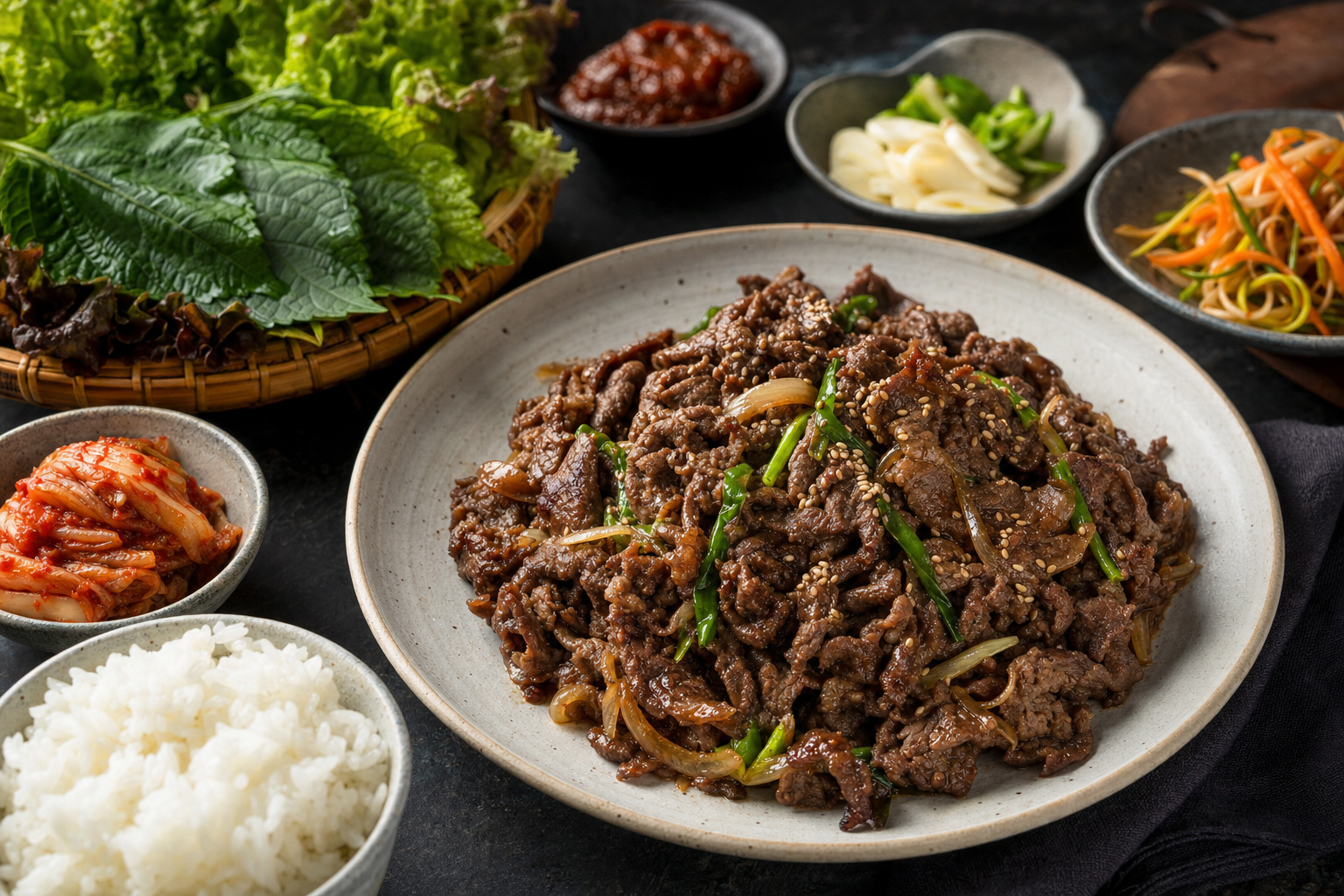
Jeyuk bokkeum, often called spicy pork bulgogi, is one of those Korean weeknight dishes that comes out of the pan in minutes and still tastes like you fussed over it: heat from the gochujang, sweetness from apple and sugar, and proper caramelised edges from a screaming-hot wok. It's usually made with the thin samgyeopsal pork belly slices sold everywhere in Korea, though butt or shoulder works just as well. Steamed rice is really all you need alongside, but lettuce leaves for wrapping, ssamjang and kimchi turn it into a full spread.
Ingredients
- 1¾ lbPorkBelly, butt or shoulder, very thinly sliced
- 4 tbspGochujangBase of the marinade
- 1½ tbspGochugaruFor extra heat and colour
- 3 tbspSoy sauceFor the marinade
- 2 tbspRice wineMirin or mirim, tames the meaty smell
- 2 tbspSugarWhite or brown
- 1 tbspHoneyExtra sweetness, plum syrup as alternative (optional)
- 1½ tbspSesame oilToasted, for the marinade
- 5 clovesGarlicFinely minced
- 1 tbspGingerGrated or finely minced
- 2¾ ozAppleGrated, tenderises the meat; Korean pear as alternative
- 4¼ ozOnionSliced, partly grated into the marinade
- 3Spring onionCut into 5 cm pieces
- 4¼ ozCabbageCut into thick strips
- 3½ ozCarrotThinly sliced (optional)
- 10Perilla leavesCut into strips, added at the end (optional)
- 4 ozRice cakesTteok, soaked beforehand (optional)
- Black pepperGround, for the marinade (optional)
- 1½ tbspcooking oilFor frying
- Sesame seedsToasted, for sprinkling (optional)
- RiceSteamed, for serving
Method
- If your pork hasn't come pre-sliced, cut it as thinly as you can — much easier if you firm it up in the freezer for a short while first.
- Grate the apple and part of the onion. Stir the gochujang, gochugaru, soy sauce, rice wine, sugar, sesame oil, garlic, ginger and the grated fruit and onion into a smooth marinade, sweetening with honey and seasoning with black pepper if you like.
- Turn the pork thoroughly in the marinade so every slice is coated, then leave it for at least 30 minutes — overnight in the fridge if you have the time.
- Meanwhile, cut the remaining onion, the cabbage and the carrot into strips, cut the spring onions into roughly 5 cm lengths, and shred the perilla leaves.
- Separate the rice cakes and soak them in warm water until they're pliable.
- Get a wok or a large frying pan very hot and add the neutral cooking oil.
- Fry the marinated pork with the onion, cabbage, carrot and the drained rice cakes in batches over medium to high heat for 6–8 minutes, until the meat is cooked through and the marinade has caramelised a little. Don't crowd the pan or everything will steam in its own liquid.
- Stir through the perilla leaves at the end, scatter over the spring onions and toasted sesame seeds, and serve straight away with steamed rice.
Tips and variations
The cut of pork is up to you: belly gives you the juiciest result, butt or shoulder are leaner, and a mix of the two is common too. Korean pear can stand in for the apple as a tenderiser in the marinade, and alongside the sugar a spoonful of honey or plum syrup (maesilcheong) adds extra sweetness. You can also cook the marinated meat on the grill instead of in the pan; the wok version with lots of vegetables and rice cakes is the more filling one. Serve it the classic way with steamed rice — and with lettuce leaves for wrapping, ssamjang and kimchi it becomes a proper little meal.
Allergens
Contains: Cereals containing gluten, Sesame, Soybeans, Sulphur dioxide and sulphites
These notes follow from this recipe's ingredient list. Ready-made products and brands may contain further allergens — please check the packaging yourself.
Something not right?
This recipe was put together from independent sources and checked before publishing. Even so, a mistake can slip through — an amount that does not add up, a step that does not work as written. If you spot something, write to us: we will look into it and put it right.