Korea · 9 h · Meat · Main course · For confident cooks
LA Galbi
In German: LA Galbi (koreanische Rindsrippchen vom Grill)
For 4 servings · US units
Thin-sawn beef short ribs, marinated overnight in pear and soy sauce
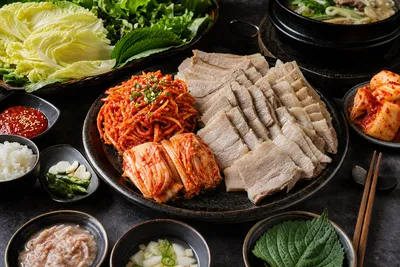
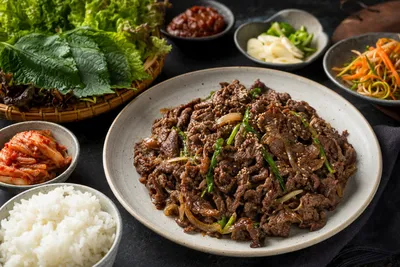
LA Galbi takes its name from the LA cut: beef short ribs sawn crosswise straight through the bone into slices just 5 to 10 millimetres thick, so they cook in minutes and caramelise along the edges. An overnight marinade of soy sauce, grated Asian pear, onion and garlic leaves the meat tender and sweet-savoury. At the table you wrap each piece in a lettuce leaf and eat it with rice, kimchi, ssamjang and whatever other banchan are on hand — made for summer and for long sessions around the grill.
Ingredients
- 3⅛ lbLA-style, cut crosswise through the bone into 5–10 mm slices; soaked and patted dryMeaty bone-in pieces of beef rib, well marbled and rich in connective tissue.Substitute: For braising, beef cheek or oxtail work well and turn similarly succulent and gelatinous. For grilling, thinly sliced rib-eye or sirloin can be used, but without the bone and with less fat.Read more
- ½ cupSoy saucebase of the marinade
- 1grated or puréed; tenderises the meat, apple works insteadA round, very juicy pear with crisp, slightly grainy flesh like an apple, mildly sweet.Substitute: A firm, juicy pear or a sweet, crisp apple. Raw, both are softer or more tart and less watery-fresh; in meat marinades they tenderise less than an Asian pear does.Read more
- 1Oniongrated or puréed for the marinade
- 6 clovesGarlicgrated or finely minced
- ⅓ ozGingergrated or as juice
- 1¾ ozBrown sugarfor sweetness and caramelisation
- ¼ cupcooking rice wine for the marinadeA clear, mild wine made from fermented rice, used in Korean cooking mainly for marinades and to tame fishy smells.Substitute: Dry sherry or a dry white wine come closest, though they taste a little fruitier. If you use Japanese mirin the dish turns sweeter, so cut back slightly on the sugar in the recipe.Read more
- ⅓ cupWaterthins the marinade
- 2 tbsptoasted, mixed in lastDark oil pressed from toasted sesame seeds, with a strong, nutty, roasted aroma; usually added at the end in small amounts as a seasoning.Substitute: There is no real substitute, as no other oil carries the roasted aroma; at a pinch, a neutral oil with freshly pan-toasted, crushed sesame seeds helps, though the flavour stays clearly weaker.Read more
- 1 tspBlack pepperfreshly ground
- 1 tbsphoneyor rice/oligo syrup or plum syrup, for gloss and depth (optional)
- 2Scallionsfinely sliced, in the marinade or as garnish
- 1 tbspSesame seedstoasted, for garnish (optional)
- 1¼ cupsColaclassic tenderising trick, for soaking or in the marinade (optional)
- lettucefor wrapping the meat, with perilla leaves if available (optional)
Method
- Rinse, soak and dry the ribsRinse the rib slices under cold water, rubbing away any bone dust and traces of blood. Soak them in cold water for 15 to 30 minutes, then drain and pat thoroughly dry.
- Trim and score the meatTrim off excess fat and silverskin. Score the thicker parts lightly or pound them flat so the marinade can work its way in.
- Purée the pear and aromaticsGrate the Asian pear, onion, garlic and ginger finely, or blitz them in a blender to a smooth purée.
- Mix the marinadeStir the purée together with the soy sauce, brown sugar, rice wine, water, black pepper and sesame oil until the sugar has completely dissolved. Add honey for gloss and depth if you like, along with the finely sliced scallions.
- Marinate overnightTurn the ribs in the marinade, coating every piece on all sides. Cover and refrigerate for at least 6 hours, ideally overnight.
- Wipe off excess marinadeLift the meat out of the marinade and wipe off the excess liquid, otherwise the sugar will scorch before the meat is done.
- Grill hot until caramelisedHeat a grill, a cast-iron grill pan or the oven broiler thoroughly and cook the slices over high heat for 2 to 6 minutes per side, until the edges caramelise.
- Cut, garnish and serveIf needed, cut the meat into bite-sized pieces between the bones, scatter with scallions and toasted sesame seeds, and serve with rice, lettuce leaves, ssamjang and side dishes.
Tips and variations
Cola is the old trick for tenderising — either added to the water the meat soaks in or poured straight into the marinade. For more depth and a mild heat, work doenjang and gochujang into the marinade, or add a splash of light vinegar or fish sauce; plum syrup (maesil-cheong) can stand in for part of the sugar. If you like a two-stage approach, give the meat a short first soak in pear and onion juice before moving it into the proper marinade. In a nonstick pan you can spoon in a little extra marinade as it cooks so a sauce forms. To serve, put out lettuce and perilla leaves with ssamjang, and a salad of garlic chives and enoki mushrooms topped with pine nuts.
Allergens
Contains: Cereals containing gluten, Sesame, Soybeans, Sulphur dioxide and sulphites
These notes follow from this recipe's ingredient list. Ready-made products and brands may contain further allergens — please check the packaging yourself.
Something not right?
This recipe was put together from independent sources and checked before publishing. Even so, a mistake can slip through — an amount that does not add up, a step that does not work as written. If you spot something, write to us: we will look into it and put it right.